Hey there! If you’ve ever been out on a worksite—say, a construction zone, a coastal warehouse, or even a farm dealing with heavy outdoor gear—you’ve probably seen those big, boxy metal units mounted on poles or sitting on concrete pads. Those are power control boxes, right? And I’ve talked to so many clients who ask the same thing: “How well do these things actually hold up when they’re exposed to the elements?” As a power control box supplier, I don’t just sell these things—I stand behind the ones we make, so let’s break down what their corrosion resistance really means, no jargon included. Power Control Box
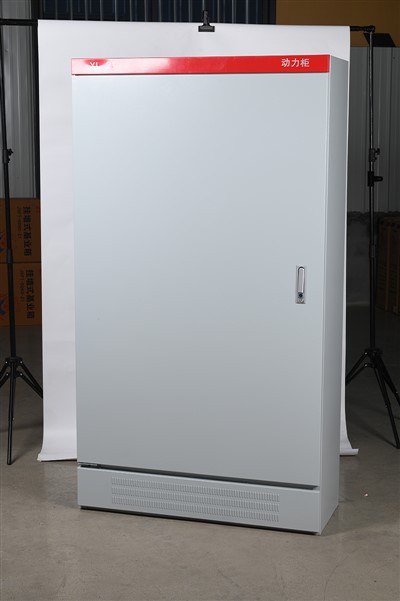
First off, corrosion isn’t just a cosmetic issue. I’ve had a customer tell me their old control box rusted so bad last year that half the electrical connections corroded, leading to three days of downtime on a solar farm project. That cost them way more than replacing the box would’ve. So corrosion resistance here is basically how well the box’s material and finish fight off rust, pitting, or degradation from whatever environment it’s in. Not all power control boxes are built the same, which is why you can’t just grab any off the shelf if you’re working somewhere harsh.
Let’s start with the materials because that’s the foundation. The base metal we use for most standard boxes is carbon steel, but wait—plain carbon steel is a corroding nightmare. It’s cheap, but if you leave it outside, it’ll start showing rust spots in a matter of months. That’s why we coat it, right? For standard indoor or mildly exposed spots—like a warehouse that gets occasional humidity, no salt or chemicals—we use a powder-coated finish. Powder coating is way tougher than liquid paint; it’s electrostatically applied, bakes on, so it doesn’t chip as easy when you’re moving it or brushing up against it on a worksite. Our standard powder-coated steel boxes can handle mild corrosion for years, no problem. But if you’re in a salt air environment—like a beach town marina, or a port where they load cargo, salt is a big one—that basic powder coating won’t cut it. Salt eats through that stuff faster than you’d think.
That’s where we jump to galvanized steel. Wait, there’s two types of galvanizing: hot-dip and electro-galvanized. Electro-galvanized is thin, good for indoor stuff, but hot-dip galvanizing is a whole other level. We dip the steel into molten zinc, so it creates a thick, protective zinc layer that actually sacrifices itself a little to keep the steel underneath from rusting. I’ve got a power control box that’s been sitting on a fishing pier in Florida for seven years—no rust spots, just a little bit of the gray patina that zinc gets. That’s the stuff for coastal areas, or places where they use de-icing salts on roads in winter—those salt crystals are brutal. And if someone needs extra? We can do a galvanized box with a powder coat on top, a “dual coating” setup. That’s the overkill for super harsh environments, like offshore platforms where they’re dealing with salt spray 24/7.
Then there’s stainless steel. That’s the heavy hitter for corrosion resistance. A lot of people think all stainless is the same, but no—304 stainless is for general use, 316 stainless is the one for high-corrosive environments. 316 has molybdenum added, which makes it way better at fighting salt and industrial chemicals. We use 316 stainless for boxes that go to chemical plants, food processing facilities, or offshore wind farms. I remember a guy from a paper mill came to us last year—his old boxes were corroding from the sulfur fumes they generate during processing, and after we swapped him to 316 stainless, he hasn’t had a single corrosion issue in a year. Compare that to his previous boxes, which lasted less than two years. That’s the difference right there.
Now, it’s not just the material and finish—design plays a huge role too. I see so many cheap boxes that have flat panels, no drainage, or corners where water pools. That’s a recipe for corrosion. Our boxes have sloped tops so water runs right off, drain plugs at the bottom so any moisture that gets inside can escape, and sealed enclosures that keep out dust and rain. Even with the best material, if water’s sitting inside the box because of bad design, you’re gonna get corrosion on the internal parts too—like the terminals and circuit breakers. We’ve tested this, too: we put a sample box in a salt spray chamber (that’s the thing that sprays salt water nonstop to simulate coastal conditions) for 1,000 hours. Our hot-dip galvanized box came out with almost no rust, while a competitor’s basic powder-coated box was pitting badly after 200 hours. That’s the kind of testing we do before we even put a box on the market.
Wait, let’s talk about real-world environments because that’s what matters, not just lab tests. Let’s break down common scenarios: if you’re in a typical office park or a retail parking lot, where it’s just occasional rain and no harsh chemicals, our standard powder-coated steel is perfect. It’ll last 10+ years with minimal maintenance, just a wipe down if it gets dirty. If you’re in a suburban area near a small lake, no salt, mild humidity—hot-dip galvanized is overkill but not a bad call, and way cheaper than 316 stainless. If you’re on a coast, a salt marsh, or a highway that uses a lot of de-icer in winter, hot-dip galvanized or 316 stainless is non-negotiable. We had a customer in Maine last year who tried a standard powder-coated box for their road crew’s power control, and it rusted through in 18 months—they came back and switched to hot-dip, and now it’s been three years, no issues. Chemical plants? Definitely 316, because those fumes will eat through even galvanizing if it’s not molybdenum-enhanced.
Also, I get asked a lot: “Can I maintain the corrosion resistance?” Yeah, you can. It’s not a set-it-and-forget-it, but it’s easy. For powder-coated or galvanized boxes, just hose them off once or twice a year, especially if they’re in a dusty or salty area. If you see a small chip in the finish (from a construction accident, or a forklift bumping it), touch it up with the same powder coating touch-up paint we offer—don’t leave the chip exposed, because that’s where corrosion starts. For stainless steel, just wipe it down with a mild detergent occasionally; stainless is pretty self-cleaning, but if you let salt or chemicals sit on it, you might get some light staining, which you can buff off with a stainless steel cleaner. That’s way cheaper than replacing the whole box.
Let’s clear up a common myth, too: people think “corrosion resistance” means it’ll never corrode. That’s not true—everything corrodes over time, it’s just a matter of how fast, and how much it affects function. Our power control boxes are engineered to minimize that rate. We’ve had a 20-year-old galvanized box from an old farm that came back to us a couple years ago, and it was still usable—just a little patina, no structural issues, no internal corrosion. That’s the kind of longevity we’re going for.
Why does this matter to you, the person buying a power control box? Let’s do the math. If you buy a cheap, low-corrosion box for a harsh environment, you’ll be replacing it every 2-3 years. A mid-tier galvanized box will last 8-10 years. A 316 stainless box will last 15+ years. Even if the stainless costs twice as much upfront, over 15 years, that’s a third of the total cost of replacing cheap boxes multiple times. Plus, downtime. A corroded power control box that fails on a worksite? That’s lost productivity, missed deadlines, maybe even fines if it’s a government project. We’ve had customers tell us the cost of downtime was 10x the cost of the box itself in some cases.
As a power control box supplier, we don’t just push the most expensive option. We help you pick the right one for your specific environment. If you’re not sure whether you need powder coat or galvanized, just tell us where it’s going—coastal? Industrial? Indoor only? We can walk you through it, show you test data from our lab, even send you a sample if you want to see the difference for yourself. We’ve worked with construction companies, solar installers, municipal governments, industrial plants, even amusement parks—all of which have different corrosion challenges, and we tailor our boxes to fit.
Wait, I should mention the internal parts too—corrosion isn’t just the outside of the box. The terminals, bus bars, and circuit breakers inside matter too. All our internal components are either tin-plated copper or nickel-plated, which resist corrosion way better than bare copper. A lot of competitors cut corners here, using bare copper, which will corrode from moisture or dust inside the box. We seal our boxes with IP-rated gaskets, too—IP65 is standard for most of our boxes, which means they’re dust-tight and can handle low-pressure water jets, so no moisture gets in to attack the internal parts. That’s a big one that a lot of people don’t think about when checking corrosion resistance.
Let me give you a quick example. Last quarter, we had two customers in similar parts of Texas. One was a small retail center, bought our standard powder-coated steel boxes for their outdoor lighting controls. They’ve had zero issues, just cleaned them once a year. The other was a chemical plant on the Gulf Coast, bought our 316 stainless boxes for their process control panels. Three months in, they had a minor chemical spill that dripped on one box—wiped it off, no staining, no damage. If they’d used the powder-coated box, that spill would’ve eaten through the finish in a week, leading to internal corrosion and a shutdown. That’s the real-world difference.
So to wrap this up: corrosion resistance in a power control box depends on three main things: the base material (carbon steel with powder coat, galvanized steel, or 316 stainless), the protective finish, and the design that prevents water and moisture from pooling or getting trapped. It’s not one-size-fits-all, and choosing the wrong one for your environment will cost you more in the long run.

If you’re in the market for a power control box and you want to make sure it’s got the right corrosion resistance for your project, reach out to us. We’ll go over your site, answer any questions you have, and help you pick a box that fits your needs and your budget. Don’t wait until you’ve got a corroded box causing downtime—get ahead of it with a box built to last.
Metal Distribution Cabinet References
ASTM B117, Standard Practice for Operating Salt Spray (Fog) Apparatus
International Electrotechnical Commission (IEC) 60529, Degrees of Protection Provided by Enclosures (IP Code)
National Association of Corrosion Engineers (NACE) International, Corrosion Control for Electrical Equipment
Shandong Qinghua Yike Electric Co., Ltd.
As one of the most experienced power control box manufacturers in China, we also support customized service. We warmly welcome you to buy durable power control box for sale here from our factory. If you have any enquiry about cooperation, please feel free to email us.
Address: No. 378 Taozhuang Village, Zaoyuan Town, Lanshan District, Linyi City, Shandong Province
E-mail: admin@sd-qhyk.com
WebSite: https://www.qhecobox.com/
