If you’ve ever stood in a pitch dark room and hit a light switch, or flipped your phone camera to capture a sunset where natural light fades fast, or even checked your smart thermostat’s reading of a 68°F room, you’re already relying on digital sensors. I’m part of a small, specialized digital sensor supplier team that spends most of our days not just selling these parts, but explaining exactly how they turn messy, unruly physical stuff—light, heat, motion, sound—into the crisp, reliable 0s and 1s that power every smart device you own. A lot of folks ask why digital sensors matter more now than ever: it’s not just that we’re cramming more tech into smaller gadgets. It’s that these sensors are the “eyes, ears, and nerves” for devices that used to have no way to interact with the real world. Today, I want to break down what goes on inside a digital sensor, from the tiny component level to the end product that shows up on your desk, in your pocket, or even in a self-driving car. Digital Sensor
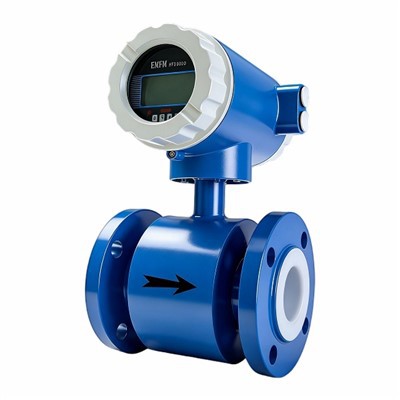
Let’s start with the biggest myth I hear: a digital sensor is not just a mini camera or a tiny thermometer. It’s a complete system, usually built from three core parts: a sensing element, a signal processor, and an analog-to-digital converter (ADC). Each part has a job, and skip any of them, and you’re stuck with a fancy part that can’t talk to your phone or laptop. The sensing element is the part that touches the physical world. For a light sensor, that’s a grid of tiny, light-sensitive diodes, each made from materials like silicon that react when photons (light particles) hit them. For a temperature sensor, it’s a thermistor— a piece of material whose resistance changes predictably when it heats up or cools down. For a motion sensor, it’s a pair of tiny, vibrating plates that shift when air moves past them, creating a tiny electrical signal. Without this element, a sensor can’t “feel” anything at all— it’s just a hunk of plastic and metal.
Next comes the signal processor. The sensing element only produces a super weak, messy signal. For example, a light diode might make a signal 100 times smaller than a single strand of static from your phone. If we tried to feed that straight to a digital device, it would be unreadable— noise would overwrite the actual data. The signal processor’s job is to clean it up: it amplifies the weak signal, filters out random static from other electronics, and adjusts it to a range that the next part can handle. It’s like holding a magnifying glass to a tiny, blurry photo and sharpening it so you can see the details. Without this step, even the most sensitive sensing element is useless.
The star of the show for “digital” is the ADC. This is the part that turns analog data— the continuous, wavy signals from the physical world, like the way sound fades in and out or light grows brighter gradually— into digital data, which is a string of 0s and 1s. Analog signals are smooth and unbroken, but digital devices only work with discrete numbers. Think of it like taking a video of a runner: analog is every single frame of their stride, while digital is just a set of 1s and 0s that approximate those frames. The accuracy of this conversion is why digital sensors feel more reliable than older analog ones. If an ADC has a high “bit depth” (say 16 bits, instead of 8), it can split a signal into more precise steps, so a light sensor won’t miss the difference between a sunny day and a slightly overcast one, or a temperature sensor won’t mix up 72°F and 73°F. For our customers, this is non-negotiable: a temperature sensor for a medical device can’t be off by a degree, and a light sensor for a smartphone can’t wash out your screen at noon.
Wait a second, I know what you’re thinking: how do these parts fit into something as small as a smartwatch or a wireless thermostat? A lot of people don’t realize that modern digital sensors are micro-electromechanical systems, or MEMS. That means they’re built using the same semiconductor manufacturing processes that make computer chips, just on a much smaller scale. For example, a MEMS motion sensor is made with tiny silicon plates, etched into a wafer so thin you could fit thousands of them on a single 12-inch silicon disk. When we assemble these, we have to be hyper-careful— even a speck of dust smaller than a grain of sand can throw off the sensing element’s accuracy. That’s why our team runs every sensor through 17 quality checks before it leaves our warehouse: we test temperature stability across -40°F to 185°F, verify that light sensors work in both direct sunlight and dim living rooms, and confirm motion sensors can detect a 1-mile-per-foot breeze and pick up small vibrations from a washing machine.
Let’s use a common example to make this real. Take the light sensor in your smartphone. When you open your camera app, the sensor goes to work: the sensing element (a grid of silicon diodes) catches the sunlight through the lens, produces a tiny analog signal based on how many photons hit each diode. The signal processor cleans up that signal, removing static from the phone’s processor and adjusting it to a range that the ADC can handle. The ADC then turns that analog wave into a digital number— for instance, a value of 456, which translates to a brightness of 1200 lumens. That number gets sent to your phone’s OS, which adjusts the screen brightness, tells the camera to increase exposure if it’s dark, and saves the photo data to your gallery. If any part of this chain fails— say the ADC can’t convert the signal properly, or the sensing element is dirty from dust— the phone’s screen will be too bright at night or too dark in the sun, and you’ll blame the “bad sensor” (which, more often than not, is a sensor that didn’t pass our quality check, so it never leaves our warehouse).
Another common question: are all digital sensors the same? Absolutely not. The type of sensing element, the ADC, and the packaging make a huge difference for what they’re used for. For industrial customers, like factories that monitor equipment temperatures, we build sensors with steel casings that can handle 250°F heat, vibration from heavy machinery, and exposure to dust or moisture. For medical customers, like insulin pumps that need to track body temperature, we build sensors with biocompatible casings, so they won’t irritate skin, and 18-bit ADCs that can detect a 0.1°F change— critical for preventing fever-related complications. For consumer electronics, like wireless headphones that pause when you take them off, we build tiny MEMS motion sensors that are only 2mm wide, so they don’t add bulk to the device, and low-power designs that only use a few microamps of battery life.
A lot of customers come to us saying they used an analog sensor in the past, but they switched to digital because digital sensors are more reliable, don’t drift over time, and work better with modern smart systems. Analog sensors only output a continuous voltage, which is easy to interfere with— a nearby power line could make a temperature sensor read 2°F higher than it actually is, and there’s no way to correct that. Digital sensors, on the other hand, can store calibration data right on the chip, so every sensor is adjusted before it leaves our facility, and even if there’s a little interference, the signal processor can filter it out. That’s why self-driving cars rely almost entirely on digital sensors: a 1°F error in a temperature sensor could cause a braking delay, and a light sensor that can’t detect a pedestrian in low light could lead to a crash.
I want to be honest, too— digital sensors aren’t perfect. They’re more expensive than analog, especially for high-precision applications, and they can struggle with extremely small signals (for example, detecting the heat of a single human body from 100 feet away, without other heat sources nearby). That’s why our team spends a lot of time working with customers to match the right sensor to their needs: we don’t want to sell a $50 precision sensor to someone who only needs a $20 basic sensor for a toy, and we don’t want to sell a basic sensor to a medical device company that needs the highest accuracy possible.
If you’re reading this, chances are you’ve interacted with at least a dozen digital sensors today: your phone’s light sensor, your laptop’s touchpad motion sensor, your smart thermostat’s temperature sensor, the security camera by your front door, even the fitness tracker on your wrist. For us, that’s what makes the work worth it. Every sensor we build isn’t just a hunk of silicon and metal— it’s a tiny link between the physical world and the digital tools that make life easier, safer, and more convenient.

If you’re looking to add reliable, high-performance digital sensors to your products, or if you’re unsure which type is right for your application, our team is here to help. We work with businesses of all sizes, from startup electronics brands to large industrial manufacturers, and we’ll walk you through every step to find the perfect fit for your needs. Reach out to us to connect for a procurement consultation.
Civil Engineering Test References:
- Fraden, J. (2016). Handbook of Modern Sensors: Physics, Designs, and Applications. Springer.
- MEMS Sensors: Fabrication and Application (2020). MDPI Sensors.
- Analog-to-Digital Converters: Principles and Design (2018). Wiley.
- “How Digital Sensors Translate Physical Phenomena to Digital Data” (2022). TechInsights.
- Industrial Digital Sensor Calibration and Quality Control (2021). ISA Publications.
Dalian Yheng Technology Co., Ltd.
Dalian Yheng Technology Co., Ltd. is one of the leading digital sensor manufacturers and suppliers in China, also supports customized service. We warmly welcome you to buy high quality digital sensor in stock here from our factory. Contact us for more details.
Address: F1605, NO.10 Huoju road, High-tech Industrial Zone, Dalian, China
E-mail: admin@dlyheng.com
WebSite: https://www.yhengphmeter.com/
