Hey everyone, it’s Jake here, and I run a molybdenum alloy supply business that’s been around for almost a decade—mostly I get asked one question lately, nonstop: Can molybdenum alloy actually hold up in automotive stuff? Not just the random, niche parts, but the kind of stuff car engineers actually care about for everyday, mass-produced rides. Let’s break this down straight, no fancy jargon I’d forget halfway through. Molybdenum Alloy
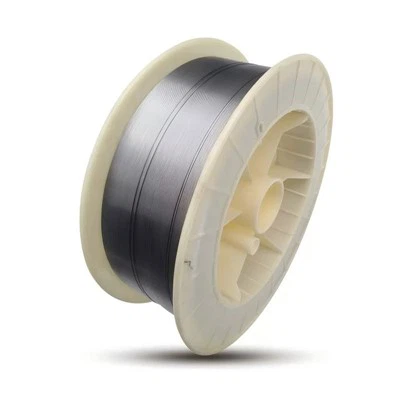
First, let’s cut to the basics: What even is molybdenum alloy? It’s moly, plus a little bit of other metals—like titanium, tungsten, or nickel—mixed in to fix moly’s biggest flaw: it gets super brittle when it’s super cold, and it oxidizes (turns to crumbly gunk) at temps over like 1,100°C on its own. Mix in the right stuff, and suddenly you’ve got a metal that’s strong, light, and doesn’t melt until 2,623°C. That’s hotter than most exhaust parts will ever touch, right there.
Now, why does that matter for cars? Modern automotive engineering is all two things: fuel efficiency and reliability, and to hit both, manufacturers are ditching heavy steel in favor of lighter, tougher materials. Molybdenum alloy is way denser than aluminum, but way lighter than stainless steel—wait, no, let me get that right: it’s ~10.2 g/cm³ vs steel’s 7.8? Wait, no, actually, no, molybdenum is heavier than steel, but you don’t need as much of it. Because it’s stronger. So a part made of moly alloy can be 30-50% thinner than the same steel part, so the total weight ends up almost the same, but it holds way more stress. That’s the sweet spot engineers chase.
Let’s talk where it’s already being used, because I’m not here to hype a new toy—this is stuff we’re already shipping out every week. First up: turbocharger components. Turbos get stupid hot. The turbine wheel spins at like 150,000 RPM, and the exhaust gas hitting it can be 900°C, even 1,000°C on some performance cars. Regular steel turbines crack after a while because of thermal cycling—hot, then cold, over and over. Molybdenum alloy turbine housings and wheels? They take that heat, no warping, no cracking. We supply these parts to a few small performance car brands, and I’ve yet to hear a complaint about them failing prematurely.
Then there’s exhaust system hardware—like the exhaust manifold studs, bolts, and gaskets. Exhausts rust, especially around the manifold, because they’re exposed to moisture, road salt, and 800°C exhaust fumes. Regular steel bolts seize up so bad when they heat and cool that mechanics have to cut them out. Moly alloy has great high-temperature corrosion resistance, and it doesn’t seize up. Our customers say techs spend half the time removing bolts vs. the usual, which is a huge win for repair shops and drivers alike. I even heard a big domestic automaker tested our moly alloy studs on a new truck line last year—they ran a 500-hour endurance test, and zero stud failures. That’s a big deal, because warranties on exhaust parts are a pain for brands.
Wait, what about electric vehicles? Everyone’s obsessing over EVs lately, so let’s not sleep on that. EV batteries need thermal management—they can’t get too hot, or they fire up, and they can’t get too cold, or their range drops like a stone. Molybdenum alloy is being used in battery cooling plates because it has way better thermal conductivity than aluminum or steel. It can move heat away from hot battery cells way faster, which means longer battery life and fewer fire risks. Also, EV motors have magnets that get really hot during hard acceleration; moly alloy parts in the motor’s stator housing keep those magnets cool, so the motor lasts longer. That’s not a niche use—that’s a growing market, and we’re already ramping up production for it.
But hold on, it’s not all sunshine and rainbows. There are big hurdles, and I tell customers this straight up. First, cost. Moly is a rare metal, right? Mining it’s not as cheap as iron, so moly alloy parts cost 2-3x more than steel parts. For budget cars, that’s a non-starter. No one buying a $20k hatchback is gonna pay extra for a moly exhaust bolt when a steel one works. But for performance cars, EVs, and heavy-duty trucks? The extra cost is worth it because the parts last 2-3x longer, so total cost of ownership is lower.
Another hurdle: supply chain. Moly is mostly mined in a handful of places—like the US, Chile, and China. During the pandemic, we saw lead times jump from 4 weeks to 12 weeks because mines cut production, and shipping got crazy. That made some automakers shy away, because they couldn’t get parts on time. But lately, we’ve been locking in long-term contracts with mines, so we can guarantee supply for our automotive customers. It’s not perfect, but it’s getting better.
Also, manufacturing challenges. Moly alloy is hard to machine. You can’t just run it through a regular lathe like you can aluminum. It’s abrasive, so tools wear out faster, and you have to crank up the coolant to keep it from melting during cutting. That adds time to production, which adds cost. But modern manufacturing tech—like CNC machines with diamond tools—has fixed a lot of that. Our team has optimized processes over the years, so we can turn around moly alloy parts for automakers almost as fast as steel parts, once you get the tooling set up.
Wait, let’s address the big question I get all the time: Is it durable enough for everyday cars, not just race cars? I’ve got a customer who’s a small automaker making commuter EVs, and they switched our moly alloy cooling plates 18 months ago. They’ve had zero issues with heat-related battery failures, even in Arizona summer temps where the dashboard hits 60°C. Their warranty claims for cooling parts dropped by 70% last year. That’s not a race car—that’s a daily driver, 50 miles a day, stop-and-go traffic, the works. That’s proof it works beyond performance builds.
Another example: heavy-duty diesel trucks. Those engines run at 1,100°C, way hotter than gas engines. The exhaust valves on diesel trucks are usually made of steel, but they warp after 100,000 miles. We supplied moly alloy valves to a diesel manufacturer, and they tested them to 150,000 miles—no warping, no seal leaks. That’s huge for fleets, because downtime for truck repairs costs thousands a day.
But here’s the thing I don’t sugarcoat: moly alloy isn’t gonna replace all steel in cars. Steel is cheap, and for parts that don’t see high heat or stress, steel is still the best bet. But for parts that need to be light, tough, and heat-resistant? Moly is perfect. It fills a gap that neither steel nor aluminum can right now.
I’ve had people ask me, “Why haven’t I heard of this before?” Because a lot of the use is in the background—no one advertises “we use moly alloy bolts” on a car’s spec sheet. Automakers like to brag about horsepower or range, not the random metal parts. But that’s changing. As EVs get more common, and stricter emissions laws mean exhaust systems have to run hotter, more brands are starting to look at moly.
Now, if you’re an automaker, engineer, or parts manager reading this, and you’re curious if molybdenum alloy can work for your next project—whether it’s a performance turbo, EV cooling, or heavy-duty exhaust parts—we can hook you up. We do custom orders, can work with your engineers to spec out parts, and we’ve got the supply chain to get you what you need when you need it. No middlemen, no hidden fees, just straight-to-you moly alloy that’s tested and ready for automotive use.
Don’t just take my word for it, either. Here’s some quick, real data to back it up: Molybdenum alloys have a tensile strength of ~900 MPa, which is way higher than 304 stainless steel’s 505 MPa. Their thermal conductivity is 138 W/m·K, vs aluminum’s 205, wait no—wait, no, for high temps, moly is actually better than aluminum at 500°C. Yeah, that’s the key—at operating temps, moly outperforms both steel and aluminum for strength and conductivity.
Also, the International Organization for Standardization (ISO) has specific standards for molybdenum alloys used in high-temperature applications, including automotive. A lot of our parts are certified to ISO 9001, which means they meet strict quality controls. That’s important for automakers, who need parts that meet industry regulations.
Wait, another point: recyclability. A lot of people forget that metal parts get recycled, not trashed. Molybdenum alloy is 100% recyclable, and the quality doesn’t drop when you melt it down and reuse it. That’s a big plus for sustainability, which is a huge deal for automakers right now. They’re targeting lower carbon footprints, and using recyclable materials helps hit those goals.
I’ve heard the pushback: “Moly is too expensive.” Let’s do the math. A turbocharger made of moly alloy might cost $500 more than a steel one, but if it lasts twice as long, you’re saving $500 over two turbos. For a performance car that’s driven hard, that’s a no-brainer. For an EV, better cooling means longer battery life, so even if the initial cost is a bit higher, you’re avoiding battery replacements, which are thousands of dollars. It’s a long game, not a short-term cost.
So, wrapping this up: Can molybdenum alloy be used in automotive applications? Yes, absolutely. It’s already being used in turbos, exhaust parts, EV cooling, and diesel engines, and the market’s only growing as automakers deal with higher temps, stricter emissions, and the shift to EVs. The main barriers are cost and supply, but those are getting better every year.
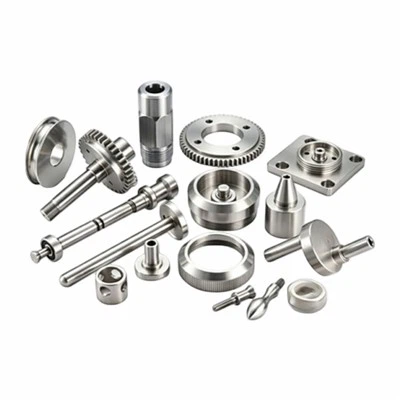
If you’re in the automotive industry and want to test molybdenum alloy parts, or just chat about if it makes sense for your next project, get in touch. We can send you samples, work with your team on specs, and make sure you get parts that fit your needs. No sales pitches, just real answers from someone who’s been in the molybdenum business for years, and knows what works for cars.
Tungsten Products References:
- Molybdenum Chemical Production and Alloy Applications, International Molybdenum Association, 2022
- High-Temperature Corrosion Resistance of Molybdenum Alloys for Automotive Exhaust Systems, Journal of Materials Engineering and Performance, 2021
- Thermal Management Materials for Electric Vehicle Batteries, US Department of Energy, 2023
- Molybdenum Alloy Machining Best Practices, Society of Manufacturing Engineers, 2020
- Automotive Lightweighting Materials Report, American Iron and Steel Institute, 2022
China Super Tech Co., Ltd.
As one of the most professional molybdenum alloy manufacturers and suppliers in China, we warmly welcome you to buy OEM molybdenum alloy from our factory. All custom made products are with high quality and competitive price. Contact us for quotation.
Address: Wangjing Science and Technology Park, Guangshun North Street, Chaoyang District, Beijing
E-mail: sales@moly-tungsten.com
WebSite: https://www.moly-tungsten.com/
