What is the operating principle of a high-voltage expulsion fuse? If you’re like the folks I talk to every day at the high-voltage fuse shop, you’ve probably seen these big, boxy devices bolted to utility poles or tucked inside substation cabinets and wondered—how do they actually work? They’re not just fatter versions of the fuses you swap in your house, right? Spoiler: they’re way more specific, and their whole job leans on one messy, reliable trick: controlled chaos. High-voltage Fuse
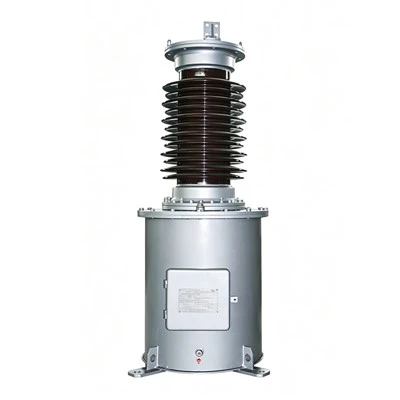
Let me break this down like I do with my nephew when he asks why the power doesn’t blow out the street. First, let’s get the basics straight. High-voltage expulsion fuses aren’t for your 120V house wiring—they’re for lines carrying 1kV up to 38kV, sometimes even more, that run between substations and neighborhoods, or out to industrial sites. These lines carry way more current, and a short circuit there isn’t just a flicker of your TV—it’s a surge big enough to melt copper wires or take out half a block if it’s not stopped fast.
Here’s the core thing most people skip: unlike a low-voltage fuse that just melts a tiny wire, the expulsion fuse works in two stages. Stage one is the “blowing” part, and stage two is the “expulsion” part—hence the name. Let’s start with the internal parts so it makes sense. Inside that porcelain or fiberglass tube (the outer shell, which is non-conductive and tough as nails), you’ve got a thin metal element—usually silver or copper, because those conduct heat well without corroding fast. Welded to both ends of that element are metal caps that bolt to the fuse’s mounting hardware. The tube isn’t empty, either—it’s stuffed with quartz sand, a super fine sand that’s like a sponge for electricity, and it’s sealed tight at both ends except for small vent holes at the bottom.
Now, the trigger: when a fault hits, like a tree branch falling across the line, or a transformer shorting out, the current surges way past what the fuse is rated for. That thin metal element heats up so fast it vaporizes in milliseconds, not seconds. Vaporizing metal is a plasma—super hot, super conductive, like a tiny lightning bolt inside the tube. That plasma would normally just arc across the gap where the element used to be, right? An arc is bad here because it’s still carrying current, so the fault doesn’t get shut off.
Enter stage two, the expulsion part. That plasma is so hot it also burns through a small pyrotechnic material we stuff at the top of the tube—think a fast-burning sparkler core, but calibrated just right. The burn of that pyrotechnic creates a sudden, controlled gas pressure inside the sealed tube. We don’t just trap that pressure—we let it shoot out the bottom vent holes, along with the plasma and the leftover metal vapor from the element. Wait, that blast of gas does two key things at once: it cools the plasma down so much it stops being conductive (that’s called “deionization,” if you want the fancy term, but I just say we’re turning the spark into harmless air), and it snuffs out the arc completely. The whole thing happens in less than a tenth of a second—faster than your eye can blink, faster than the utility’s breaker can even react sometimes.
But here’s the catch that a lot of newer guys at the shop mess up: this is a one-time device. You can’t reset it like a circuit breaker. The vent holes, the quartz sand, even the metal element—they’re all gonzo after a single fault. That’s why we make a point to tell our customers: an expulsion fuse is a “set it and forget it” (but only until it blows) part. You don’t test it after a fault, you replace it. Still, that one-and-done design is exactly what makes it so reliable for outdoor, high-voltage lines. It doesn’t need a power source, it doesn’t have moving parts that wear out, it just works when the moment counts.
Wait, let’s clear up a common mix-up: expulsion fuses vs. other high-voltage fuses, like current-limiting ones. Current-limiting fuses are designed to stop even bigger surges by absorbing the arc, right? But expulsion fuses? They rely on that gas blast to blow the arc away, which makes them cheaper and simpler for medium-voltage lines (the 15kV to 25kV stuff most suburbs run). They’re perfect for protecting distribution transformers—you’ll see ’em on the pole right next to the gray box that drops your house’s voltage down from 12kV or whatever. If your transformer blows, nine times out of ten, that expulsion fuse did its job, not the other way around.
I get asked all the time: “Why not just use a breaker instead?” Breakers are great, but they’re bigger, pricier, and need maintenance. An expulsion fuse costs a fraction of what a breaker does, is way lighter to haul up a pole, and doesn’t need wires or a control panel to work. For small to medium faults, it’s overkill in the best way—you put it there to take the hit so the more expensive equipment (transformers, lines) doesn’t have to.
Now, let’s talk about how we test these bad boys at the shop to make sure they actually work. We don’t just slap a metal wire in a tube and call it a day. We run “fault current” tests in a lab where we can crank up a surge way bigger than what a neighborhood fault would throw at it. We check that the arc gets snuffed within 50 milliseconds max, that the vent holes don’t clog up (clogged vents are a big no—if gas can’t escape, the tube can break, which is dangerous when it’s on a pole 30 feet up), and that the quartz sand is evenly distributed so there’s no weak spot that would let the arc stick around. We also test for temperature extremes—hot as 120°F in the desert, cold as -40°F in the mountains—because a fuse that works in Texas might not cut it in Minnesota.
A lot of people don’t realize that expulsion fuses have different ratings, too. The “rating” isn’t just a number on the label—it’s tailored to the line it’s protecting. A 15kV fuse for a residential line can’t handle the same surge as a 35kV fuse for an industrial factory’s power line. Mess that up, and either the fuse won’t blow when it’s supposed to (bad) or it’ll blow for no reason (annoying, and you’ve got a crew out replacing it for a false fault). That’s why we work with customers to get the right fit, not just sell them the cheapest box on the shelf.
Here’s a real example from last month, to make it concrete. A customer out in rural Iowa called us panicking—their 20kV line had a fault from a lightning strike, and their old fuse failed to blow, so a transformer on a farm burned out. They ordered a new set of expulsion fuses from us, rated specifically for their line’s maximum current, and when a new wind storm popped up a week later, those fuses worked exactly as they should. The farmer’s power was back in 15 minutes, instead of 3 hours waiting for a breaker to reset. That’s the part of the job I love—seeing something I build keep lights on and farms running.
Now, I know this stuff can feel techy, but the core idea is simple: a high-voltage expulsion fuse is a one-time safety net that blows fast and blows hard, in a good way, to stop a fault before it turns into a bigger problem. It’s not magic, it’s controlled heat and pressure, and that’s why it’s been the go-to for utility crews for decades.
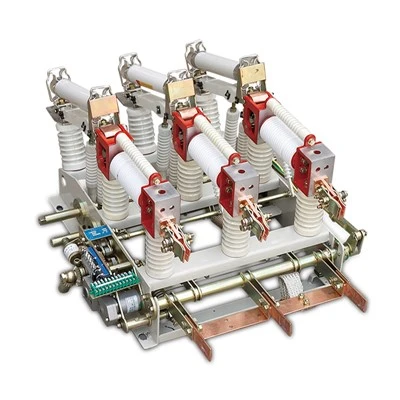
If you’re a utility manager, a substation technician, or someone who works with high-voltage equipment and needs reliable, properly rated expulsion fuses, we’ve got you covered. We’ve been building and supplying these fuses for years, and we know how important it is to have a part that works when you need it most. Contact us to discuss your specific application, get the right rating, and make sure your system has the protection it needs.
High and Low Voltage Switchgear References
- IEEE Standard for High-Voltage Fuses, IEEE Std C37.42-2018
- Electric Power Research Institute (EPRI), Distribution System Protection: Fuse Selection and Application, 2021
- National Electrical Manufacturers Association (NEMA), High-Voltage Expulsion Fuse Performance Requirements, Publication 250-2020
Zhongtai Electric Power Technology Co., Ltd.
With abundant experience, we are one of the most professional high-voltage fuse manufacturers and suppliers in China. We warmly welcome you to wholesale bulk customized high-voltage fuse from our factory. If you have any enquiry about quotation, please feel free to email us.
Address: High-tech Industrial Park, Chongren County, Fuzhou City, Jiangxi Province (No. 261 Yingbin Avenue)
E-mail: info@zhongtaielectric.com
WebSite: https://www.zhongtaipower.com/
