Hey everyone, Mechanical Water Meter
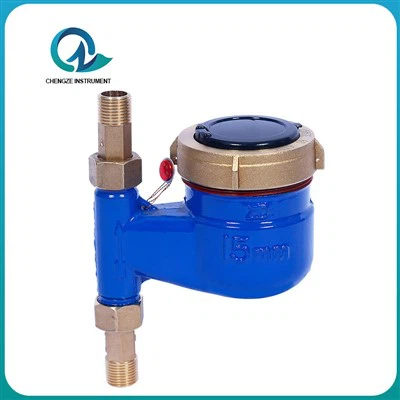
If you’re in the market for mechanical water meters—whether you’re a property manager, a plumber, or someone who’s been troubleshooting their building’s water flow tracking—you’ve probably wondered: how much hot or cold can these meters actually handle? I get it; when you’re relying on a meter to give accurate readings for billing or maintenance, you don’t want it crapping out because you accidentally ran a load of 140°F water through it, or it sat outside in 10°F weather for a week. As someone who’s been supplying mechanical water meters for over a decade, I’ve fielded this question so many times from customers, and it’s way more critical than just “pick a number off a spec sheet.” Let me break this down, no stuffy jargon, just what actually matters.
First, let’s start with why temperature matters so much for mechanical meters, unlike, say, digital ones. Our mechanical meters work on simple physics: a propeller or piston spins when water flows past, and that spin translates to a reading on the display. Every part inside—plastic gears, copper couplings, rubber seals, even the metal casing—has a limit to how much heat or cold it can take before it warps, freezes, or just stops working. Skip that spec check, and you’re looking at a meter that’s either totally broken, reading way off, or leaking.
Now, the minimum temperature. This is where a lot of people mess up, especially folks in colder climates. You might think, “It’s just water, how cold can it get before the meter breaks?” Wrong. Water expands when it freezes—we all learned that in school, but it’s way more brutal inside a mechanical meter. If water seeps into the small gaps between the gears, seals, and the casing, and that water turns to ice, it expands. That expansion can crack the plastic gear housing, shear the metal shaft that the propeller spins on, or blow out the rubber seals. We’ve had customers last winter send us photos of meters that were installed above ground in unheated basements, and the casings were split right down the middle.
So what’s the actual minimum? Most standard residential mechanical meters we supply are rated for a low of 32°F, duh—freezing point of water. But wait, hold on: that’s the absolute minimum for short periods. If it’s sitting at 30°F for a day or two, the water inside might not actually freeze solid if there’s a tiny bit of flow, right? But if it’s 28°F for longer, or it’s a commercial meter sitting in an outdoor pit with no insulation, that water will freeze, and you’re in for a replacement. We also have a line of cold-climate meters—specialized ones with thicker, more impact-resistant casings and seals that don’t get brittle in the cold. Those can handle down to 20°F, but only if they’re properly installed with insulation. Even then, we warn customers that anything below 20°F is a risk, and if the meter’s going to be in temps that low for more than a few hours, you need a heat trace cable or a heated enclosure. I can’t tell you how many times a customer has tried to save $20 on insulation and ended up spending $500 on a new meter and a pipe repair. That’s the kind of call I always push back on.
Now the maximum temperature—this is another big one, especially for multi-family buildings with on-demand hot water, or industrial facilities that use process water. A lot of people think “hot water’s just hot, right?” but mechanical meters have a hard limit on heat. The rubber seals, for example, are usually EPDM or nitrile, which break down when they get too hot. If the seals crack, you get leaks inside the meter, and water gets into the gears, causing them to seize up. The plastic parts (like the gear housing or the display cover) warp at high temps too—you’ll end up with a display that’s stuck, or gears that can’t spin because the housing is misshapen. Even the metal parts, like the brass couplings, can corrode faster when exposed to high heat; that corrosion builds up and slows down the meter, so your readings are off by 10% or more, which can kill you on monthly bills.
So what’s the max? Standard residential and commercial meters are rated for 120°F. That’s perfect for most hot water needs—residential hot water heaters are usually set to 120°F to save energy, so that lines up. But wait, if you have a laundromat, a commercial kitchen, or a facility that uses 140°F hot water (like some food processing plants), 120°F is way too low. That’s why we sell high-temperature mechanical meters for those applications—those are rated up to 180°F, and they use heat-resistant seals and a brass gear housing instead of plastic. I had a customer a few months back who installed a standard 120°F meter in his bakery’s hot water line for dishwashing, and within two weeks, the display was all fogged up and the meter was reading 20% low. He swapped it for a high-temp model, and he hasn’t had a problem since.
But here’s a caveat for max temp: it’s not just the steady temp, it’s also fluctuations. If you have a line that goes from 60°F cold water to 150°F hot water multiple times a day, that thermal shock can be just as bad as being at 180°F all the time. The parts expand and contract unevenly, which causes cracks in the seals or warping. So even a high-temp meter needs to be able to handle those swings—our high-temp models are designed for that, but we still tell customers to check their water heater settings and avoid those rapid swings if possible.
Wait, but what about exceptions? I know some of you are going to say, “What about meters used for swimming pools? Those are even colder, or what about meters for steam lines?” Hold up—pool meters are usually different; they’re made to handle slightly lower temps, but pool water is also corrosive, so you need a special meter for that. Steam lines? Wait, no—mechanical meters don’t handle steam at all, because steam is way too hot and it’s a gas, not liquid. For steam, you need a different type of meter, usually ultrasonic. Our mechanical meters are only for liquid water, so if someone asks about steam, I send them right to our ultrasonic meter line. That’s a good rule of thumb: mechanical water meters are for potable water, non-potable, or even chilled water, but stick to liquid, and don’t push the temp limits if you can avoid it.
I should also mention that these ratings are from the test data we get from our manufacturers, but your actual installation matters a lot. If you install a meter in a spot that’s poorly ventilated, like a closed utility closet with a water heater right next to it, even a 120°F rated meter might hit 130°F because of the surrounding heat. Or if you bury a meter in a trench that floods in the winter, even a 32°F rated meter might get submerged in water that drops to 28°F. That’s why I always ask customers to tell me where the meter is going to be installed: indoor, outdoor, near a hot water line, in a cold basement? Because that changes which meter you should get.
Let me share a quick horror story to drive this home. A customer last year, a small apartment building owner, installed 5 standard mechanical meters in the outdoor vaults in Minnesota last November. They thought 32°F was fine, and the vaults were supposed to be insulated. But the insulation got damaged during a snowstorm, and for three nights, the temp dropped to 25°F. By December, two of the meters were totally dead—they couldn’t spin the propeller at all, and the third was reading 30% low. They ended up having to dig up three meters, replace them, and re-insulate the vaults, which cost them way more than if they’d just gotten the cold-climate meters I suggested when they first reached out. That’s exactly why I don’t just sell a meter and forget about it; I make sure customers understand the real-world limits, not just the spec sheet numbers.
Now, what if you’re right on the edge? Like, your hot water is 125°F, which is 5 over the standard max. Don’t panic—you don’t have to spend extra on a high-temp meter if you can insulate the hot water line a few feet away from the meter, or adjust your water heater temp down a bit. Most water heaters are set too high anyway; lowering it from 140 to 120 saves energy and is safer, too. That’s a win-win. For cold temps, if your meter’s in an unheated space, adding a simple foam insulation sleeve around it and wrapping the pipes going in and out can keep it above freezing, so you don’t need the cold-climate upgrade.
At the end of the day, the temp limits for mechanical water meters aren’t arbitrary. They’re based on the materials we use, the physics of how the meter works, and real-world use cases. If you stay within those limits, your meter will last 10, 15, even 20 years with minimal maintenance. Push them, and you’re looking at premature replacement, inaccurate readings, or even leaks that cause water damage.

If you’re not sure which meter is right for your space—whether you’re dealing with cold outdoor installations, high temp hot water, or just want to make sure your current meter isn’t pushing its limits—hit me up. I’ve got years of experience matching customers to the right meters, and I can walk you through what specs matter for your specific setup. Don’t wait until your meter breaks mid-billing season or in the dead of winter; get it sorted now, so you don’t end up with a headache (and a hole in your wallet).
IoT Remote Water Meter References:
- American Water Works Association. (2020). Standard for Mechanical Water Meters for Potable Water. ANSI/AWWA C701-20.
- International Association of Plumbing and Mechanical Officials. (2021). Uniform Plumbing Code Requirements for Water Meter Temperature Ratings. IPC Section 608.
- Water Technology International. (2019). Material Compatibility for Mechanical Water Meters: Temperature and Chemical Resistance. Vol. 37, No. 4.
- National Association of Plumbing-Heating-Cooling Contractors. (2022). Guide to Installing Water Meters in Extreme Temperature Environments. NAPHCC Technical Bulletin 12-22.
Shandong Chengze Instrument Co., Ltd.
We’re well-known as one of the leading mechanical water meter manufacturers in China, featured by quality products and good service. Please rest assured to buy high-grade mechanical water meter for sale here from our factory. Also, customized service is available.
Address: No.7, Wensi Road North Industrial Park, Liguan Town, Lanshan District, Linyi City, Shandong Province, China
E-mail: czwatermeter@163.com
WebSite: https://www.cz-watermeter.com/
