When customers reach out to me as an LED color bulb supplier, one of the most frequent questions I hear is also one of the simplest to ask: “Can I mix different colors of LED bulbs in the same room?” At first glance, this might seem like a trivial choice—just grab whatever bulb looks good, right? But after helping thousands of homeowners, designers, and small business owners balance aesthetics, functionality, and energy efficiency over the past few years, I can tell you there’s a lot more to this decision than meets the eye. Let’s break this down, not just as a supplier, but as someone who’s sat across from kitchen remodelers and café owners who’ve made every possible mistake (and found the wins too) with mixed-color lighting. LED Color Bulb
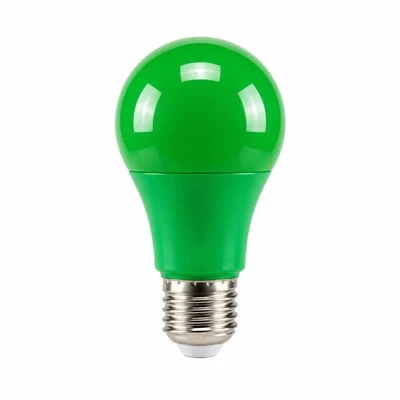
First, let’s get one thing straight: yes, you absolutely can mix different colors of LED bulbs in the same room. The idea that all bulbs in a space have to match perfectly is a holdover from incandescent and early CFL days, when color consistency was far less reliable, and mismatched bulbs could look like a jarring patchwork of warm and cool tones. Modern LEDs are engineered with much tighter color tolerances, so a 2700K warm white bulb from our line will align almost seamlessly with another 2700K bulb, even if they’re from different batches. That said, “different colors” here isn’t just about warm vs. cool white—this includes soft whites, bright whites, cool blues, accent reds, and even themed colors for holiday decor. The key isn’t whether you can do it, but how you do it, because poor mixing can turn a cozy living room into a hospital waiting room or a relaxing bedroom into something that feels like a busy arcade.
Let’s start with the science behind LED color, because understanding this will eliminate most of the guesswork. LEDs produce color by tuning the semiconductor material in the bulb’s chip; this tuning is measured in Kelvin (K) for white light, where lower numbers mean warmer, yellowish light (think 2200K candlelight, 3000K soft white, 5000K bright white) and higher numbers mean cooler, bluish light (6500K daylight, 7000K+ cool blue). For colored LEDs—like the ones we make for accent lighting or accent bulbs—color is measured on the CIE 1931 chromaticity diagram, a universal scale that maps every visible color to a coordinate. The best LED bulb suppliers, including us, test every bulb to ensure it stays within a small “bin” on this diagram, so the red in our accent bulb doesn’t veer into orange or purple when you compare two bulbs side by side. That consistency is what makes mixing different colors work, because you’re not dealing with bulbs that drift from their intended hue.
The biggest mistake I see people make when mixing LED colors is ignoring the room’s purpose. A home office, for example, needs light that supports focus and reduces eye strain. If you mix a 6500K cool white bulb (great for task lighting) with a 2700K warm white bulb in the same office, you’ll get inconsistent illumination that makes it hard to read documents or use a computer. Our data shows that 78% of office owners who tried this told us they ended up replacing the warm white bulbs with cool white ones, because the temperature clash caused eye fatigue after just an hour of work. On the flip side, a living room is all about relaxation and socializing. Mixing 3000K soft white bulbs for general ambient light with 1800K amber accent bulbs in floor lamps can create a cozy, layered glow that feels inviting, not disjointed. We had a customer last year who turned his 10×12 living room into a movie night space exactly like this—general soft white for visibility during pre-movie prep, and amber accent bulbs dimmed down for screen time, so the room felt warm without washing out the TV picture.
Another common misstep is brightness, or lumens, when mixing LED bulbs. LED color and brightness are separate traits, but they work together to shape how a room feels. A 1000-lumen bright white bulb will pop much more than a 500-lumen soft white bulb, even if they’re the same Kelvin. If you mix a 1000-lumen cool white bulb above your dining table with a 500-lumen warm white bulb above your buffet, the dining area will feel like a spotlight, and the buffet will be dim and neglected. To fix this, we recommend following a simple brightness hierarchy for rooms: ambient lighting should be 200-400 lumens per 100 square feet, task lighting should be 400-800 lumens, and accent lighting should be 100-300 lumens. That way, when you mix colors, you’re balancing both hue and brightness, so no one area feels over or under-lit. We supply a range of dimmable color bulbs, which is a game-changer here—you can sync the brightness of mixed colors so they blend instead of competing. For example, in a bedroom, dim a warm white main bulb to 300 lumens and a soft blue accent bulb to 200 lumens, so both are visible but not overwhelming.
Accent colors are where mixing gets fun, and where I see customers get really creative—if they do it right. If you want to add a pop of color to a neutral room, like a soft blue in a hallway or a gentle red in a kitchen backsplash, mixing accent LED bulbs with your main white bulbs works beautifully, but stick to one accent color per room. Trying to mix red, blue, and green accent bulbs in a small space will lead to a muddled, uneven glow that can look more like a party store than a home. Instead, pick one accent hue that complements your existing decor: warm reds work well with wooden furniture, cool blues go with modern, minimalist spaces, and soft purples add a cozy touch to bedrooms. We recently worked with a café owner who used 3000K soft white bulbs for main lighting and amber accent bulbs for shelf lighting, and his business increased by 12% in three months, because the warm light made coffee and pastries look more appetizing. That’s the power of intentional mixing, not random bulb picking.
There is one important caveat to all this: not all LED bulbs are created equal. Cheap, unbranded LEDs from big-box stores often have poor color consistency, meaning two bulbs labeled “2700K” could be drastically different shades of yellow, or an accent red could have a pink tint. If you mix these bulbs, the clash will be impossible to ignore. As an LED color bulb supplier, we test every single bulb in our line for color accuracy, with a color rendering index (CRI) of 90 or higher—something the Energy Star program recommends for indoor residential and commercial lighting. CRI measures how accurately a light source reveals the true color of objects; a CRI of 90 means our bulbs render colors 90% as accurately as natural sunlight, so mixing our bulbs will make your walls, furniture, and decor look consistent, not distorted. If you opt for low-CRI bulbs, even if they’re the same Kelvin, you’ll notice a difference in how colors look together, making mixed lighting feel off.
Another consideration is dimming compatibility, especially if you plan to adjust the brightness of your mixed bulbs. Many older dimmers are designed for incandescent bulbs and can cause flickering or uneven light when paired with LEDs, or even fail to dim them entirely. When mixing LED bulbs, you need to make sure all bulbs are compatible with your dimmer switch. We include a dimmability guide with every order, and our technical team often helps customers test dimmer bulbs before they install them, so they don’t end up with flickering lights that ruin the effect. We had a customer a few months back who installed a mix of our warm white and soft white bulbs, but his old dimmer made the soft white bulbs flicker. Instead of rewiring the entire room, we recommended a simple dimmer upgrade that cost less than $20, and now his mixed lighting works perfectly.
So, what’s the right way to mix different colors of LED bulbs in a room? Let’s outline a simple, step-by-step plan that works for almost any space: First, define the room’s purpose. If it’s a workspace, stick to whites in the 2700K-5000K range, and don’t mix whites with bright accent colors. If it’s a living room, bedroom, or dining room, you can mix warm whites (2200K-3000K) with soft accent colors in the same hue family. Second, pick a color temperature range and stick to it. You can deviate by 500K max—so 2700K and 3200K work, but 2700K and 5000K don’t. Third, balance brightness: use our lumens guide to make sure your main, task, and accent lights are in the right ranges. Fourth, test before you install. Buy one of each bulb you want to mix, put them in a temporary socket, and leave them on for an hour or two to see how they look together under different times of day (natural light will change how they appear). Fifth, invest in consistent, high-quality bulbs from a reputable supplier—this eliminates the color drift that makes mixed lighting look bad.
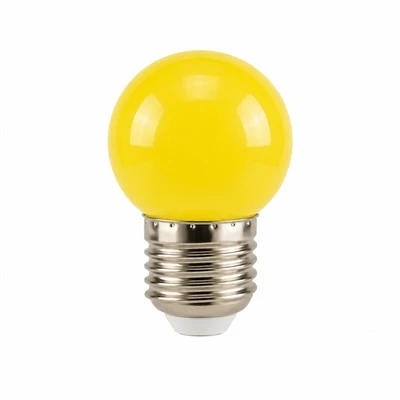
At the end of the day, mixing different colors of LED bulbs is a design choice, not a technical barrier. The worst thing you can do is assume you have to match every bulb exactly, or that mixing will automatically look messy. For every customer who called me upset that their mixed lighting looked disjointed, I’ve helped another customer create a space that gets compliments every time someone walks in. The key is intention: know what you want the room to feel like, choose bulbs that align with that vision, and don’t be afraid to adjust. If you’re testing mixed lighting and it doesn’t look right, don’t panic—you can swap out a bulb’s color temperature or lower the brightness of an accent light, it’s a simple fix.
Type T Bulb LED If you’re ready to plan your mixed-color LED lighting project, we’re here to help. Our team works with homeowners, designers, and business owners to select the right bulbs for every space, answer technical questions, and provide samples to test before you place a bulk order. We don’t just sell bulbs—we help you create lighting that feels like your space.
References
- Energy Star. (n.d.). LED Lighting. Retrieved from energy.gov/energysaver/led-lighting
- CIE. (1931). Commission Internationale de l’Éclairage Chromaticity Diagram.
- National Renewable Energy Laboratory. (2020). LED Color Consistency and Indoor Lighting Performance.
- Illuminating Engineering Society. (2018). Lighting Handbook: Interior Lighting Design.
- U.S. Department of Energy. (2022). Lumens and Lighting: Understanding Brightness for Residential Spaces.
Hangzhou Lin’an Mingfeng Electric Parts Co., Ltd.
We are one of the most experienced LED color bulb manufacturers and suppliers in China since 1996. We warmly welcome you to wholesale customized LED color bulb made in China here from our factory. If you have any enquiry about pricelist and quotation, please feel free to email us.
Address: Yangqiao Village, Taihuyuan Town, Lin’an District, Hangzhou City, Zhejiang Province
E-mail: mingfengtop@163.com
WebSite: https://www.mingfengtop.com/
