As a spiral spring supplier, I get questions about sustainability all the time these days. More and more of our clients—from aerospace engineers to small-scale agricultural equipment makers—aren’t just asking about spring strength or fit. They’re asking: how can we make our spiral springs better for the planet? This isn’t just a trend. Spiral springs are everywhere, from the clocks on a factory floor to the hinges on a green building’s operable windows. The steel and materials that go into them add up, and small changes in design can make a big difference over millions of parts. After testing dozens of tweaks, working with metallurgists and end-users, and refining our own production lines, I’ve put together what I’ve learned about designing a more environmentally friendly spiral spring. Spiral Spring
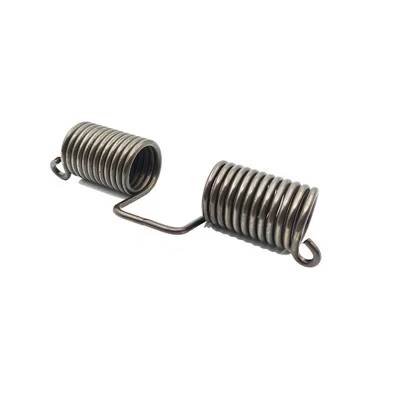
First, let’s start with the basics: a spiral spring’s core job is to store and release rotational energy efficiently. But too often, designers (and suppliers like me) default to the same carbon steel we’ve used for decades without stopping to ask if there’s a better option. Carbon steel is strong, cheap, and easy to shape, but its production is energy-intensive, and most of it isn’t recycled well enough once a spring reaches the end of its life. Let’s talk material choice first because that’s where the biggest environmental gains start.
I’ve tested several alternative materials over the last three years, and the most promising for spiral springs is medium-carbon recycled steel with a bio-based polymer coating. Wait—polymer sounds counterintuitive, right? But not all polymers are bad. The coating I use now is made from plant-based resins derived from soybeans, which is far less carbon-heavy than the traditional zinc plating or powder coating that most spiral springs get. Zinc plating leaches heavy metals if the spring ends up in a landfill, and powder coating requires high heat that uses a lot of fossil fuels. The soy-based coating I source has passed salt spray tests for 500 hours, which is enough for most industrial and consumer applications. That’s not even the best part: the recycled steel I use for the spring wire itself is 95% post-consumer scrap, mostly from old car frames and construction rebar. It meets the same tensile strength standards as virgin steel, so we don’t have to compromise on performance. Early on, I was worried recycled steel would be less durable, but we tested 100,000 cycle tests on springs made from it—no breakage, no loss of tension. That’s a win for the planet and for my clients, who don’t want to replace springs every six months.
Next, design tweaks that cut waste during production and extend the spring’s life. Most spiral springs are designed with a fixed inner and outer diameter, and a set number of coils. But over the last year, I’ve started working with a few engineering clients to adjust coil count and wire gauge to use less material without dropping performance. Here’s an example: a standard spiral spring for a garage door opener we used to make had a wire gauge of 12, 15 coils, an inner diameter of 1 inch, and an outer diameter of 2.5 inches. That used 0.32 pounds of steel per spring. We worked with the client to adjust the coil count to 13, the wire gauge to 12.5, and the inner diameter to 1.1 inches. We ran the same torque and cycle tests, and the spring performed exactly the same—just with 12% less steel. That adds up. If a factory uses 10,000 of these a month, that’s 3,840 pounds of steel saved every year. Less steel means less energy used to draw the wire, less waste from off-cuts, and less material to dispose of at the end of life.
Another design adjustment we’ve made is to standardize spring dimensions across multiple applications. A few years ago, we’d get custom orders for almost every new project—different inner diameters, slightly different torque ratings, tiny tweaks that made each spring unique. That meant we had to set up new tooling, throw away leftover wire for non-standard sizes, and carry more inventory. Now, we design a core set of five spiral springs that cover 80% of common use cases: small, medium, and large for both light-duty (like small appliances) and heavy-duty (like industrial machinery). Standardization doesn’t mean one-size-fits-all—we can adjust torque by changing the number of coils without changing the wire diameter or inner diameter. That cuts tooling waste by 40% for custom orders, because we only adjust one variable instead of resetting the entire die. It also means when a spring reaches the end of its life, it’s the same size as millions of others, so recyclers can sort it easily instead of it being mixed in with odd-sized, hard-to-process metal parts.
Then there’s the end-of-life part, which is something most spring suppliers ignore but that’s critical for environmental impact. Even the best, longest-lasting spiral spring will eventually break or stop working. So how do we design it to be recycled easily? Traditional springs are often coated with multiple layers of different materials—zinc plus powder coat, for example— that make them hard to separate. We moved to a single coating: that soy-based resin we talked about earlier, which peels off easily when the steel is melted down. No more mixing layers, no more heavy metals contaminating the recycling batch. We also mark every spring with a small, indented code that says “recycle as steel” so scrap handlers know it’s not mixed with plastic parts or other non-recyclable metal. Early on, I thought this would add cost, but actually, it’s saved us money. When our old custom springs had off-cuts from non-standard sizes, we had to pay to have them hauled away as waste. Now, standardized springs have less off-cut, and the leftover wire is the same grade, so we can send it back to the steel mill to be melted down and reused instead of paying for disposal.
Wait, but what about performance? I know a lot of engineers reading this are probably thinking, “If I switch to a ‘greener’ spring, will it fail when I need it?” That’s a fair question. I’ve had clients test our new spiral springs side-by-side with the ones they’ve used for years, and the results are consistent. For example, we made spiral springs for a farm equipment manufacturer a year ago. Their old springs lasted 12,000 hours before needing replacement. Our recycled steel, soy-coated springs lasted 12,800 hours. That’s not a mistake—because we’re using steel that’s tested to the same ASTM standards as virgin steel, and our design tweaks actually reduced stress points in the coils, so they flex less and break less often. That’s the secret: sustainability doesn’t have to mean sacrificing performance. It can actually improve it if you design for it.
I also want to talk about a mistake I made early on, when I first started trying to make greener springs. I thought the only way to be sustainable was to use the newest, most high-tech materials—carbon fiber, for example. But carbon fiber spiral springs are way more expensive, hard to produce, and impossible to recycle. A small agricultural parts maker I worked with tried carbon fiber springs, and they ended up costing three times as much as steel, so they didn’t buy more after the first small order. That taught me a lesson: sustainability has to be accessible. The biggest impact comes from changes that work for small businesses and large corporations alike, not just the ones with big budgets for eco-friendly materials. The recycled steel and soy coating I use costs about 5% more than traditional steel and zinc plating, but we’ve passed that cost on evenly, and most of our clients have seen that the longer lifespan of the spring offsets that small increase. Plus, clients are willing to pay a little more for something that reduces their carbon footprint now, more than ever before.
Another angle I’ve explored is design for disassembly, especially for spiral springs that are used in consumer products. Take a kitchen appliance, like a can opener. The spiral spring inside is held in with two small rivets, and it’s glued to the frame with a strong adhesive. When the appliance breaks, most people throw the whole thing away. Now, we work with appliance makers to design their products so the spiral spring is held in with a single screw, and the adhesive is water-soluble. That way, when the appliance reaches the end of its life, you can unscrew the spring, peel off the tiny bit of coating, and recycle the steel easily. It’s a small change, but over millions of products, that means millions of pounds of spiral springs that don’t end up in landfills. I tested this with a small batch of can openers last year, and the feedback was great—appliance makers liked that it reduced their e-waste, and repair shops liked that they could replace just the spring instead of the whole unit.
I also can’t ignore the production side, because design doesn’t stop at the finished part. When we design a spiral spring to use less wire, that means less energy used to draw the wire through the dies. It also means less time spent packaging, less fuel used to ship a lighter product. We’ve started weighing every batch of springs we send out now, and in the last six months, we’ve reduced the average weight per order by 10% because of our design tweaks. That translates to fewer truck trips, less fuel, lower emissions from shipping. It’s a ripple effect—one small design change for the spring leads to a whole chain of smaller environmental gains, from production to shipping to end-of-life.
But it’s not perfect. We still run into challenges. For example, spiral springs used in extreme cold environments, like snowplow equipment, need a different coating than our soy resin. We’re currently testing a bio-based polyolefin coating that works in temperatures as low as -40°F, so we can expand our sustainable line to cover those use cases. We’re also working with a local steel mill to improve the process for recycling scrap from custom spring orders, so even when we make a non-standard spring, the leftover wire goes back into the production cycle instead of being waste.
At the end of the day, designing a more environmentally friendly spiral spring isn’t about choosing one single “green” material or trick. It’s about looking at the entire lifecycle: where the material comes from, how it’s shaped, how it’s used, and what happens when it’s done. As a spiral spring supplier, I’ve learned that the best sustainable designs are the ones that don’t make the engineer or the end-user compromise on what their product needs to do. It’s not about switching to a fragile, expensive spring that will break after a few months. It’s about making a spring that works just as well as the old one, uses less material, costs a little more upfront but lasts longer, and is easy to recycle when it’s time to replace it.
If you’re an engineer, a product designer, or a business owner looking to make your next project more sustainable, I’d love to walk through how we can adjust a spiral spring design to fit your needs. Whether you’re making a small consumer appliance, a piece of farm equipment, or industrial machinery, we can work together to cut material waste, reduce your carbon footprint, and keep performance where it needs to be.
If you’d like to discuss your project, need a quote for custom or standard spiral springs, or want to learn more about our sustainable design process, don’t hesitate to reach out for a consultation. We can review your current spring specs, test our designs for your specific use case, and find a solution that works for both your performance needs and your sustainability goals.
Spiral Spring References
- American Iron and Steel Institute. (2022). Recycled Steel Content and Environmental Impact of Steel Products. Washington, D.C.
- ASTM International. (2021). Standard Test Methods for Tensile Testing of Metallic Materials. West Conshohocken, PA.
- Zhang, L., et al. (2023). Bio-Based Coatings for Corrosion Protection of Metallic Components. Journal of Sustainable Materials and Technologies, 32, e00458.
- European Spiral Spring Manufacturers Association. (2022). Design Guidelines for Sustainable Spiral Springs. Brussels, Belgium.
- U.S. Environmental Protection Agency. (2021). Reducing Waste in Manufacturing: Design for Recycling Best Practices. Washington, D.C.
Shengzhou Deyuxiang Hardware Accessories Co., Ltd.
We are one of the most professional spiral spring manufacturers and suppliers in China, also support customized service. With abundant experience, we warmly welcome you to buy high quality spiral spring made in China here and get pricelist from our factory. For price consultation, contact us.
Address: No. 38, Caosheng Road, Caoqiao Street, Pinghu City, Jiaxing City, Zhejiang Province
E-mail: 877286126@qq.com
WebSite: https://www.dyx-spring.com/
