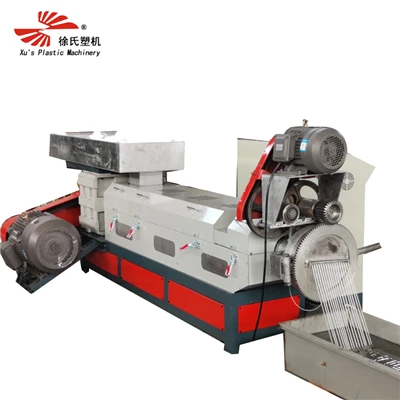
As a supplier of plastic granulator machines, I often get asked about the granule chemical resistance of the plastic granules produced by our machines. This is a crucial aspect, especially for industries where the plastic products will be exposed to various chemicals. In this blog, I’ll delve into what chemical resistance means for plastic granules, how it’s influenced by different factors, and why it matters in real – world applications. Plastic Granulator Machine
Understanding Chemical Resistance of Plastic Granules
Chemical resistance refers to the ability of a plastic material to withstand the action of chemicals without significant degradation or change in its physical and mechanical properties. When plastic granules are used to manufacture products, they may come into contact with a wide range of substances such as acids, bases, solvents, and oils. If the plastic lacks proper chemical resistance, it can lead to issues like swelling, cracking, discoloration, and a decrease in strength.
For example, in the automotive industry, plastic components under the hood are exposed to engine oils, coolants, and various chemicals. If the plastic used doesn’t have good chemical resistance, it can deteriorate over time, leading to component failure. Similarly, in the chemical processing industry, plastic pipes and containers need to resist the corrosive effects of the chemicals they carry.
Factors Affecting Chemical Resistance
Polymer Type
The type of polymer used in the plastic granules is the most fundamental factor influencing chemical resistance. Different polymers have different molecular structures, which determine their interaction with chemicals.
- Polyethylene (PE): It is a widely used polymer. High – density polyethylene (HDPE) has good resistance to many non – polar solvents and aqueous solutions. It is often used in applications such as water pipes and chemical storage containers. However, it can be attacked by strong oxidizing agents and some hydrocarbons at elevated temperatures.
- Polypropylene (PP): PP also has excellent chemical resistance, especially to acids and bases. It is commonly used in the food packaging industry and chemical processing equipment because of its ability to withstand a wide range of chemicals.
- Polyvinyl Chloride (PVC): PVC has moderate chemical resistance. It can resist many acids, alkalis, and salts. However, it is sensitive to some organic solvents, which can cause swelling and softening.
Additives
Additives play an important role in enhancing the chemical resistance of plastic granules.
- Stabilizers: These are added to prevent degradation of the polymer due to heat, light, and chemical reactions. For example, heat stabilizers are used in PVC to prevent it from degrading when exposed to high temperatures during processing or use.
- Antioxidants: They protect the polymer from oxidation, which can be caused by exposure to oxygen in the air or certain chemicals. Antioxidants help maintain the mechanical and chemical properties of the plastic over time.
- Fillers: Some fillers, such as glass fibers or talc, can improve the chemical resistance of plastics. They can act as barriers, reducing the penetration of chemicals into the polymer matrix.
Processing Conditions
The way the plastic granules are processed also affects their chemical resistance.
- Molding Temperature: If the molding temperature is too high, it can cause thermal degradation of the polymer, reducing its chemical resistance. On the other hand, if the temperature is too low, the plastic may not be fully melted, resulting in a less – homogeneous structure that is more susceptible to chemical attack.
- Cooling Rate: A rapid cooling rate can lead to internal stresses in the plastic, which can make it more prone to cracking when exposed to chemicals. A slower, more controlled cooling rate can help relieve these stresses and improve chemical resistance.
Testing Chemical Resistance
To ensure that the plastic granules produced by our plastic granulator machines have the desired chemical resistance, we conduct a series of tests.
Immersion Tests
In immersion tests, samples of the plastic granules are immersed in different chemicals for a specified period. The samples are then evaluated for changes in weight, dimensions, and mechanical properties. For example, if a sample swells or loses weight after immersion, it indicates that the plastic is being affected by the chemical.
Chemical Exposure Chambers
We also use chemical exposure chambers to simulate real – world conditions. The plastic samples are placed in chambers where they are exposed to a controlled environment of chemicals and environmental factors such as temperature and humidity. This allows us to observe the long – term effects of chemical exposure on the plastic.
Importance of Chemical Resistance in Different Industries
Packaging Industry
In the packaging industry, plastic granules with good chemical resistance are essential. For food packaging, the plastic must be able to resist the chemicals present in the food, such as acids in fruits and vegetables, without leaching any harmful substances into the food. In pharmaceutical packaging, the plastic needs to protect the drugs from chemical degradation and contamination.
Construction Industry
In construction, plastic pipes, fittings, and insulation materials need to have high chemical resistance. For example, PVC pipes used for plumbing must be able to withstand the chemicals in the water supply, such as chlorine and various minerals. Plastic insulation materials should resist the effects of moisture and chemicals in the building environment.
Electronics Industry
In the electronics industry, plastic components are used in a variety of applications. These plastics need to resist the chemicals used in the manufacturing process, such as solvents and cleaning agents. They also need to be able to withstand the heat generated by electronic devices without degrading.
Our Plastic Granulator Machines and Chemical – Resistant Granules
Our plastic granulator machines are designed to produce high – quality plastic granules with excellent chemical resistance. We use advanced technology and high – precision components to ensure that the polymers are processed under optimal conditions. This helps to maintain the integrity of the polymer structure and enhance the chemical resistance of the granules.

We also work closely with our customers to understand their specific requirements. Based on their needs, we can recommend the appropriate polymer type and additives to achieve the desired chemical resistance. Our technical support team is always available to provide guidance on processing parameters to ensure the best results.
Plastic Dryer Machine If you are in need of plastic granules with specific chemical resistance properties or are interested in our plastic granulator machines, we encourage you to contact us. We can provide you with detailed information, samples, and technical support. Whether you are in the packaging, construction, electronics, or any other industry, we are confident that we can meet your needs.
References
- "Plastics Materials" by Brian Ellis
- "Handbook of Plasticizer Technology" by George Wypych
- "Polymer Science and Technology" by Donald R. Paul and C. B. Bucknall
Yantai Xushi Machinery Co., Ltd.
We’re well-known as one of the leading plastic granulator machine manufacturers and suppliers in China since 1988, featured by quality products and low price. Please feel free to wholesale cheap plastic granulator machine for sale here from our factory. We also accept customized orders.
Address: Kuangzheng Xujia, Shahe Town, Laizhou City, Yantai City, Shandong Province
E-mail: info@sd-pengcheng.com
WebSite: https://www.xushimachinery.com/
