If you’ve ever walked past a soda shop, a skincare aisle, or a beer taproom and noticed how a sleek, custom design on a glass or plastic bottle makes you pause before reaching for the next one, you’ve seen the work of a bottle printing machine. As someone who’s been supplying these machines to small-batch brands, startup studios, and established manufacturers for over eight years, I can promise you this question comes up every single week: “What’s the price range of a bottle printing machine?” It’s not a one-size-fits-all number, but I’ve helped hundreds of buyers narrow it down by matching their goals, output needs, and budget to the right equipment—and I’m breaking that all down here today. Bottle Printing Machine

First, let’s get one thing straight: bottle printing machines aren’t all the same. Some are tiny enough to fit in a home workshop and print 50 bottles an hour, while others are industrial giants that can handle 10,000 bottles an hour, with precision and durability that keeps them running 20 hours a day. That variation is why the price range is so wide—spanning roughly $1,500 on the low end to over $250,000 on the high end. To make sense of that, let’s walk through the main categories of machines, who they’re for, and what you can expect to pay for each.
The lowest tier of bottle printing machines is what I call “entry-level semi-automatic desktop printers.” These are for hobbyists, micro-startups, or small businesses that only print specialty bottles—think a local candle maker printing their logo on 100 glass tumblers for a holiday sale, or a craft brewery doing a small batch of limited-edition labels. These machines are small, lightweight, and easy to use; most don’t require a full-time operator, and you can learn the basics in a couple of hours. The printing method here is usually screen printing, which is the most common for bottles because it’s durable and works on curved surfaces. For context, screen printing works by pushing ink through a fine mesh stencil onto the bottle, so each design has crisp lines and can use multiple colors. Entry-level desktop models typically print 30 to 60 bottles per hour, which is enough for small runs. The price for these? Between $1,500 and $5,000. A few years ago, I sold a desktop screen printer to a startup that made organic lip balm; they printed 250 bottles a week for their first year, and that machine never let them down. The only tradeoff here is that if you need to print more than a few hundred bottles a week, this machine will become a bottleneck pretty quickly.
Next up is the mid-tier semi-automatic screen printing press, which is what most small to medium-sized brands invest in once their product takes off. Let’s say you’ve got a craft soda company that’s doing 5,000 bottles a month, or a skincare brand that’s expanding to 10,000 bottles a month. These presses are bigger than desktop models, usually come with a rotating carousel that holds multiple bottles, and can print between 600 and 2,000 bottles per hour. Most importantly, they can handle up to 6 colors per print run, which is a big upgrade from the entry-level models that usually max out at 2 or 3 colors. A lot of these mid-tier presses also have adjustable platens, so they can print on bottles of different diameters—so you can use one machine for 12 oz soda cans, 16 oz water bottles, and 8 oz skincare jars without retooling every time. The price for these ranges from $10,000 to $50,000, depending on how many colors it can handle and how customizable it is. Last year, I worked with a craft beer brand that grew from 2,000 bottles a month to 15,000 in a year. They had been using an entry-level desktop printer and were falling behind on order fulfillment, so they upgraded to a 4-color semi-automatic press for $22,000. They said it paid for itself in 3 months because they could finally keep up with their distributors’ orders without hiring extra staff to print bottles. There are also some mid-tier models that use digital printing instead of screen printing, which is a game-changer for small, custom runs of 500 or fewer bottles. Digital bottle printers don’t require making screens for each design, so you don’t have to pay for setup costs or wait for a stencil to be made. Those mid-tier digital printers usually range from $25,000 to $60,000, and they’re perfect for brands that do limited editions or personalized bottles—like a winery that prints custom names on wedding favor bottles.
Now, if you’re a large-scale manufacturer or a brand that’s printing 10,000 or more bottles a day, you’ll need an automatic bottle printing press. These are industrial-grade machines that run 24/7 in many cases, with integrated conveyors that move bottles through the printing process without any human intervention. They can print anywhere from 2,000 to over 10,000 bottles per hour, can handle up to 8 or even 12 colors, and work with almost any type of bottle material—glass, PET, HDPE, even aluminum. Some of the top automatic presses also have integrated curing systems (like UV lamps or ovens) right into the machine, so the ink dries immediately after printing, which means you don’t have to set bottles aside to dry for hours or days. That’s a huge time-saver for large runs, because it cuts down on production time drastically. These machines don’t come cheap, though. Entry-level automatic presses start around $75,000, and high-end, multi-color, fully customized automatic presses can go for $200,000 to over $250,000. I sold one of these to a national soda brand two years ago; they were printing 120,000 bottles a day across three different flavors, and their old semi-automatic press couldn’t keep up with demand. The automatic press they bought had 6 colors, worked on both 12 oz and 20 oz bottles, and could cure the ink in under 10 seconds. They told me that not only did it increase their production capacity by 40%, but the consistency of the prints was way better than their old setup, which helped reduce returns from retailers. There’s also a new category of high-speed digital printing presses for large runs, which are becoming more popular because they can handle variable data—like printing a unique serial number or QR code on each bottle, which is great for anti-counterfeiting or loyalty programs. These digital automatic presses usually range from $150,000 to $300,000, depending on speed and capabilities.
Before we wrap up the price ranges, it’s important to talk about the hidden costs that a lot of first-time buyers miss. A machine’s sticker price isn’t all you’ll pay. For screen printing machines, you’ll need to pay for screens, ink, and setup fees for each new design—sometimes $50 to $200 per color per design. For digital machines, you might have to buy special ink cartridges that are specific to the bottle material, which can be more expensive than regular printer ink. You’ll also need to factor in training costs: even a simple desktop printer needs a few hours of training, while an automatic industrial press requires a trained operator, and some suppliers charge extra for on-site training. Maintenance is another cost; semi-automatic and automatic presses need regular servicing—like replacing worn parts, calibrating the platens, and cleaning the printing heads—which can run $500 to $2,000 a year, depending on the machine. And don’t forget installation: industrial automatic presses need to be set up by a professional, which can cost $1,000 to $5,000, depending on how complex the setup is.
So, how do you figure out which price range is right for you? Ask yourself a few questions first. How many bottles do you need to print per month? If it’s less than 500, an entry-level desktop printer is enough, and you won’t need to spend more than $5,000. If it’s between 500 and 10,000, a mid-tier semi-automatic machine is your sweet spot, usually between $10,000 and $60,000. If you’re printing more than 10,000 bottles a month, an automatic press is the only way to go, starting at $75,000 and up. You should also think about your design needs: if you change designs often or do small custom runs, a digital mid-tier machine might be worth the extra cost to avoid screen setup fees. If you do the same design for large runs, a screen printing machine will be cheaper per bottle in the long run, even if the upfront cost is similar.
Another thing to keep in mind is that not all suppliers are the same. When I first started in this business, I saw a lot of buyers get scammed by cheap, no-name machines from overseas that broke down after a few months. Those machines might seem like a good deal on price, but the lack of warranty, spare parts, and support will end up costing you more in repairs and downtime. All the machines I supply come with a 1-year parts warranty, on-site training, and a 24/7 support line, so if something goes wrong, you’re not waiting weeks for a replacement part. I also work with every buyer to create a custom quote based on their exact needs, so you don’t pay for features you don’t need—like a 12-color automatic press if you only ever use 3 colors.
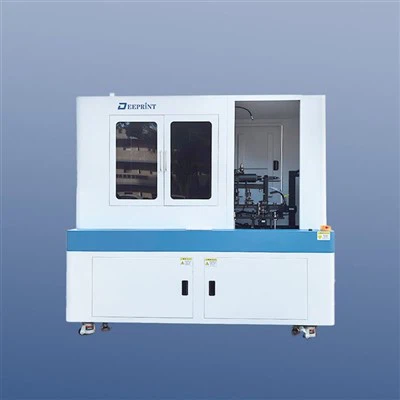
At the end of the day, the price of a bottle printing machine is an investment in your business. It’s not just about printing logos—it’s about creating a product that stands out on shelves, meets your demand, and doesn’t hold you back as you grow. If you’re tired of outsourcing your bottle printing to a third party and paying per bottle, or if you’re outgrowing your current machine and need something that can keep up, I’m here to help. We can talk through your current production volume, your design needs, and your budget, and find a machine that fits you perfectly, without the unnecessary extras. Reach out to discuss your requirements today.
Visual Positioning Flatbed Printer References
- International Organization for Standardization. (2021). Glossary of terms for printing machinery and equipment. ISO 12647-1:2021.
- Smith, L. (2022). The impact of custom packaging on small consumer goods brand growth. Journal of Retail and Consumer Services, 67, 102987.
- Printing Industries of America. (2023). 2023 U.S. Bottle Printing Machinery Market Report. Printing Industries of America, Alexandria, VA.
- Miller, T. (2021). Semi-automatic vs automatic printing presses: A cost-benefit analysis for small to medium manufacturers. Manufacturing Insights Quarterly, 15(3), 45-52.
- European Committee for Standardization. (2022). Safety requirements for industrial printing machinery. EN 1010-6:2022.
- Chen, M. (2023). Digital vs screen printing for curved surfaces: Quality and cost comparison. Packaging Technology and Science, 36(4), 217-229.
Shenzhen Deeprint Technology Co., Ltd.
As one of the most professional bottle printing machine manufacturers and suppliers in China, we’re featured by quality products and good service. Please rest assured to buy customized bottle printing machine made in China here from our factory. Contact us for free sample.
Address: 6-1, Huangwu Road, Tongle Community, Baolong Street, Longgang District, Shenzhen City 518100,China.
E-mail: ellen@uvdprint.com
WebSite: https://www.uvd-print.com/
