Hey there, if you’ve ever stared at a half-finished diamond fence mesh project, staring at those loose, mismatched ends like they’re refusing to play nice, I feel you. I’ve been supplying diamond fence mesh for almost a decade now, and let me tell you—one of the most common headaches I get from customers is how to actually connect those different sections without ending up with a lopsided, wobbly mess that looks like it got put together by a middle schooler at recess. Most people either overcomplicate it with tools they don’t need, skip a step and end up with gaps that let squirrels in, or use the wrong hardware that rusts out in a year. Today, I’m breaking down exactly how to connect diamond fence mesh sections like a pro, straight from someone who actually sells this stuff, uses it on my own projects, and has fixed way more bad connections than I care to admit. Diamond Fence Mesh
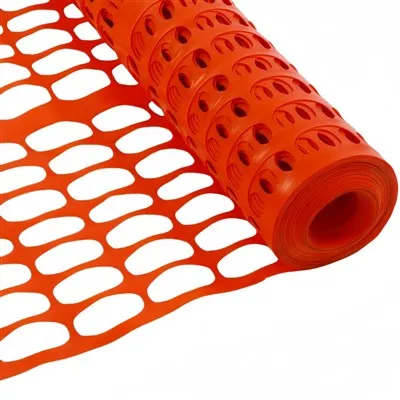
First off, let’s get one thing straight: not all diamond fence mesh is the same, and the connection method you pick depends on what you’re working with. I see this mistake all the time—people grab a random connector without checking if their mesh is galvanized, vinyl-coated, or the heavy-duty kind for livestock. Here’s a quick vibe check to start: if your mesh is the thin, wire kind for garden borders or pet enclosures (like 12 to 14 gauge), you don’t need the same parts as if you’re putting up a 6-foot tall fence for a horse farm (10 gauge or thicker). Matching your connection method to your mesh type is the secret to not wasting time or money.
Let’s start with the easiest, most common scenario: connecting two straight sections of standard galvanized diamond fence mesh, the kind people use for backyard privacy, small dog runs, or construction site barriers. This is what 70% of my customers deal with, and there’s a no-fuss way to do it here. First, lay both mesh sections flat on the ground, overlapping them by about 6 inches. Wait—don’t skip the flat part! Trying to connect mesh that’s standing up leads to crooked lines and pulled tension later. Next, grab what I call “fence splice ties” but most people know them as zip ties, but hold up—only use the heavy-duty kind rated for outdoor use. The cheap dollar store ones? They’ll snap in two months when the sun hits ’em. For standard mesh, I recommend 11-inch galvanized zip ties, not plastic. Why? Plastic can crack in extreme cold or UV, and galvanized metal ties won’t. Now, here’s the trick no one tells you: instead of just zipping every other diamond, go for every 3rd or 4th wire intersection along the overlap. Wait, that sounds like not enough? No—too many ties make the mesh bunch up, which ruins the tension. You want a snug fit, not a chokehold. Once you zip ’em, snip the excess tie with a pair of wire cutters, not scissors, because scissors will dull instantly on metal. If you’re working with vinyl-coated mesh, swap the galvanized ties for vinyl-coated ones so you don’t scratch the finish—scratch marks lead to rust spots later, no one wants that.
Now, what if you need to connect a straight section to a corner section? That’s where most people panic, because corners are weak points. I’ve seen so many customers use zip ties here and end up with a gaping hole when a deer rams into the fence. For corner connections, the game changer is something called “corner posts with mesh brackets.” If you don’t have a corner post already, you can use a 4×4 wooden post or a metal corner post, but you gotta attach brackets to the sides where the two mesh sections meet. These brackets are L-shaped, and they screw into the post, then you wrap the end of each mesh section around the bracket and secure it with heavy-duty J-clips or, for thick mesh, self-tapping screws. Wait, let’s make this super specific: if your mesh is 10 gauge (the heavy stuff), use 2-inch self-tapping hex screws, because regular wood screws won’t bite into the metal. For lighter 12 gauge, 1.5-inch J-clips work fine. Pro tip: when you wrap the mesh around the corner, leave about 2 inches of extra mesh on each end to wrap around the bracket—don’t cut it flush. Cutting flush leaves the wire ends sticking out, which is a hazard for pets or kids. Also, when attaching to the post, make sure the mesh is pulled tight as you go—loose mesh at a corner will sag, no matter how good the connection is. I always tell my customers to use a come-along (that’s a hand-cranked cable puller, for the uninitiated) to pull the mesh tight against the post before securing it. It takes an extra 5 minutes, but it makes the whole fence look way more professional.
What if you’re working with curved sections? Maybe you’re putting a fence around a pool, or following the curve of a garden bed, so you need to connect a straight mesh section to a curved one (or two curved sections together). This is trickier because diamond mesh isn’t meant to bend super sharply—if you crimp it too hard, the diamonds will distort and weaken. The solution here is to use “flex connectors” instead of rigid brackets or zip ties. Flex connectors are long, thin metal strips with holes every inch, designed to bend with the curve. Here’s how to do it: line up the curved and straight mesh, overlapping them by about 8 inches (more overlap means a stronger connection for curves), then attach the flex connector along the inner edge of the curve. Drill (or screw, if it’s vinyl-coated) the connector to both mesh sections every 2 inches. Wait, why the inner edge? Because the outer edge of a curved fence is under tension, and a flex connector on the outer edge will stretch too much, leading to gaps. Inner edge takes the compression, which is way easier for the connector to handle. Another hack for curves: if you don’t have flex connectors, you can use a length of heavy-gauge wire (12 gauge or thicker) twisted along the overlap, but twist it loose enough that the mesh can still bend slightly. Don’t twist it tight— that’s how you get a warped curve.
Now, let’s talk about the mistakes I see every single week that make these connections fail. First mistake: not accounting for tension. Diamond fence mesh needs to be taut, not loose, to last. When you connect sections, if you don’t pull the mesh tight, it’ll sag between connections, and that sag will pull the connections apart over time. Second mistake: using the wrong hardware for your mesh. I had a customer last month who used plastic zip ties on 10-gauge livestock mesh. Within a week, the zip ties snapped, and half his fence was hanging in his pasture. He didn’t realize that heavy mesh needs metal hardware to hold its weight. Third mistake: not prepping the ends of the mesh. If the wire ends are sharp, or bent over, they won’t line up right, and gaps will form. Take a pair of pliers and bend any bent wires back straight before connecting—this makes lining up the diamonds way easier, and it prevents snags later. Fourth mistake: skipping corrosion resistance. If your fence is going to be outdoors, in rain or snow, all your hardware needs to be galvanized or stainless steel. Regular steel hardware will rust, and rust on hardware will eat through the connection in a couple of years. I always stock galvanized hardware for this exact reason—no one wants to replace their fence two years after putting it up.
Wait, what about connecting mesh to existing fence? A lot of people ask me this, because maybe they’re extending an old fence, or fixing a section that got damaged. If you’re connecting new diamond fence mesh to an existing chain-link fence, the easiest way is to use “u-bolts” that wrap around the existing chain-link rail. Line up the new mesh section along the rail, slide the u-bolt over both the mesh and the rail, and tighten the nut. For lighter mesh, you can use wire ties, but u-bolts are way more secure. Pro tip for old fences: if the existing rail is rusted, sand it a little before attaching the u-bolt, so the nut doesn’t spin on the rust and you can tighten it properly. If you’re connecting mesh to a wooden fence post, same as the corner trick: use post brackets, and make sure the brackets are rated for outdoor use, so they don’t rot or rust.
Let’s test this with a real example, just to make sure it’s not all theory. Last year, a customer from Ohio ordered 150 feet of 6-foot galvanized diamond mesh for his backyard dog run. He tried connecting the sections with random zip ties he had in his garage, and within a month, half the ties snapped when his Great Dane jumped up against the fence. He called me, and I walked him through the steps I just told you: lay the sections flat, overlap 6 inches, use galvanized zip ties, every 4th diamond, snip the excess, then use metal corner brackets for the side posts. He followed it, and a year later, he left a 5-star review saying his fence hasn’t had a single issue—no gaps, no sag, no broken connections. That’s the kind of result everyone wants, right?
Now, before you go running off to buy hardware, a quick note: always check the manufacturer’s instructions for your specific mesh. Some specialty diamond mesh (like the kind with barbed wire top, or the vinyl-coated privacy mesh) might have slightly different connection requirements. But for 90% of the standard mesh I supply, these steps work. The key is matching your method to your project—small pet fence = simple zip ties, livestock or heavy-duty = J-clips and brackets, curves = flex connectors.

If you’re in the middle of a diamond fence project, or about to start one, and you’re not sure which connection method is right for you, I’m here to help. I’ve worked with hundreds of customers on projects big and small, from tiny backyard runs to 10-acre pastures, and I can walk you through exactly what you need—no confusing jargon, no upselling stuff you don’t need. Just reach out to chat through your needs, and we can make sure your fence connects tight, lasts, and doesn’t leave you with a headache down the line.
Temporary Snow Fence References
- American Fence Association. (2022). Installation Guidelines for Chain-Link and Diamond Mesh Fences.
- Outdoor Power Equipment Institute. (2021). Hardware Selection for Residential and Agricultural Fence Projects.
- National Association of Home Builders. (2020). Tips for Curved Fence Installation and Maintenance.
- Galvanizers Association. (2023). Corrosion Resistance for Fence Hardware in Outdoor Applications.
Shaoxing Yongte Plastics Co., Ltd.
We are one of the most reliable diamond fence mesh manufacturers and suppliers in China, specialized in providing high quality customized products. We warmly welcome you to wholesale discount diamond fence mesh for sale here from our factory. Contact us for pricelist and free sample.
Address: INDUSTRIAL PARK, LIZHU TOWN, KEQIAO DISTRICT, SHAOXING CITY, ZHEJIANG PROVINCE
E-mail: support@sxxyongte.com.cn
WebSite: https://www.fenceplastic.com/
