As a supplier of mesh knitted fabric, I often encounter various inquiries about the potential uses of our products. One question that has piqued my interest recently is whether mesh knitted fabric can be used for soundproofing. In this blog post, I will delve into the scientific aspects of soundproofing, explore the characteristics of mesh knitted fabric, and analyze its viability as a soundproofing material. Mesh Knitted Fabric
Understanding Soundproofing
Before we assess the suitability of mesh knitted fabric for soundproofing, it’s essential to understand the basic principles of soundproofing. Sound is a mechanical wave that travels through a medium, such as air, by causing the molecules in the medium to vibrate. When sound waves encounter a barrier, three things can happen: they can be reflected, absorbed, or transmitted through the barrier.
Soundproofing materials are designed to reduce the transmission of sound waves from one side of a barrier to the other. This can be achieved through two main mechanisms: absorption and reflection. Absorptive materials convert the energy of sound waves into heat, while reflective materials bounce the sound waves back towards their source.
Characteristics of Mesh Knitted Fabric
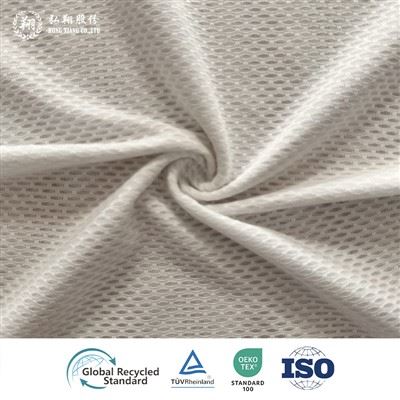
Mesh knitted fabric is a type of textile that is characterized by its open, porous structure. It is made by interlocking loops of yarn in a pattern that creates a network of small holes or spaces. The size and shape of these holes, as well as the density and thickness of the fabric, can vary depending on the type of yarn used and the knitting technique employed.
One of the key properties of mesh knitted fabric is its breathability. The open structure of the fabric allows air to circulate freely, making it comfortable to wear and suitable for use in applications where ventilation is important. Additionally, mesh knitted fabric is lightweight, flexible, and stretchable, which makes it easy to work with and adaptable to different shapes and sizes.
Analyzing the Potential of Mesh Knitted Fabric for Soundproofing
The effectiveness of a material for soundproofing depends on several factors, including its density, porosity, thickness, and surface area. In general, materials that are dense, porous, and thick are better at absorbing sound waves than materials that are lightweight and non-porous.
When it comes to mesh knitted fabric, its open, porous structure suggests that it may have some potential for sound absorption. The small holes in the fabric can act as channels that allow sound waves to enter the material, where they can be scattered and absorbed by the fibers. However, the effectiveness of mesh knitted fabric as a soundproofing material will depend on several factors, including the size and shape of the holes, the density and thickness of the fabric, and the frequency of the sound waves.
Size and Shape of the Holes
The size and shape of the holes in mesh knitted fabric can have a significant impact on its sound absorption properties. Smaller holes are generally better at absorbing high-frequency sound waves, while larger holes are more effective at absorbing low-frequency sound waves. This is because high-frequency sound waves have a shorter wavelength and are more easily absorbed by small openings, while low-frequency sound waves have a longer wavelength and require larger openings to be absorbed.
In addition to the size of the holes, the shape of the holes can also affect the sound absorption properties of mesh knitted fabric. Irregularly shaped holes are generally more effective at absorbing sound waves than circular or square holes, as they create more surface area for the sound waves to interact with.
Density and Thickness of the Fabric
The density and thickness of mesh knitted fabric can also affect its sound absorption properties. In general, denser and thicker fabrics are better at absorbing sound waves than lighter and thinner fabrics. This is because denser and thicker fabrics have more fibers per unit volume, which provides more surface area for the sound waves to interact with and increases the likelihood of sound absorption.
However, increasing the density and thickness of mesh knitted fabric can also reduce its breathability and flexibility, which may limit its suitability for certain applications. Therefore, it’s important to find a balance between sound absorption performance and other properties, such as breathability and flexibility, when selecting mesh knitted fabric for soundproofing applications.
Frequency of the Sound Waves
The frequency of the sound waves is another important factor to consider when evaluating the effectiveness of mesh knitted fabric for soundproofing. Different materials have different sound absorption characteristics at different frequencies, and the optimal material for soundproofing will depend on the specific frequency range of the sound waves that need to be blocked.
Mesh knitted fabric is generally more effective at absorbing high-frequency sound waves than low-frequency sound waves. This is because high-frequency sound waves have a shorter wavelength and are more easily absorbed by the small holes and fibers in the fabric. However, for applications where low-frequency sound waves need to be blocked, additional soundproofing materials or techniques may be required.
Real-World Applications of Mesh Knitted Fabric for Soundproofing
While mesh knitted fabric may not be as effective as traditional soundproofing materials, such as acoustic foam or mass-loaded vinyl, it can still be used in certain applications where sound absorption is required. Here are some examples of real-world applications where mesh knitted fabric can be used for soundproofing:
- Automotive Interiors: Mesh knitted fabric can be used in automotive interiors to reduce noise and improve the acoustic comfort of the passengers. It can be used as a lining material for doors, ceilings, and floors, or as a filling material for seat cushions and headrests.
- Home Decor: Mesh knitted fabric can be used in home decor applications to reduce noise and improve the acoustic quality of a room. It can be used as a wall covering, a curtain, or a room divider, and can be customized to match the decor of the room.
- Industrial Equipment: Mesh knitted fabric can be used in industrial equipment to reduce noise and improve the working environment for employees. It can be used as a lining material for machinery enclosures, ventilation ducts, and exhaust systems, or as a filling material for acoustic panels and baffles.
Conclusion
In conclusion, while mesh knitted fabric may not be the most effective soundproofing material on the market, it does have some potential for use in certain applications where sound absorption is required. Its open, porous structure allows it to absorb some sound waves, and its lightweight, flexible, and breathable properties make it easy to work with and adaptable to different shapes and sizes.
However, it’s important to note that the effectiveness of mesh knitted fabric for soundproofing will depend on several factors, including the size and shape of the holes, the density and thickness of the fabric, and the frequency of the sound waves. Therefore, it’s important to carefully evaluate the specific requirements of your application and consult with a soundproofing expert before selecting mesh knitted fabric as a soundproofing material.
Printed Knitted Fabric If you are interested in learning more about the potential uses of mesh knitted fabric for soundproofing, or if you would like to discuss your specific requirements with our team of experts, please contact us. We would be happy to provide you with more information and assist you in finding the right solution for your needs.
References
- Beranek, Leo L. Noise and Vibration Control. McGraw-Hill, 1971.
- Craik, R. J. M. The Handbook of Acoustics. Springer, 2007.
- Fahy, Frank J., and Peter A. Walker. Sound and Structural Vibration: Radiation, Transmission and Response. Academic Press, 2007.
Zhejiang Hongxiang Textile Technology Co., Ltd.
Zhejiang Hongxiang Textile Technology Co., Ltd. is one of the most professional mesh knitted fabric manufacturers and suppliers in China. With abundant experience, we warmly welcome you to wholesale custom made mesh knitted fabric from our factory. If you have any enquiry about cooperation, please feel free to email us.
Address: No. 8, 12th Road, Warp Weaving Park, Maqiao Street, Haining City, Jiaxing City, Zhejiang Province
E-mail: gd@hongxiang888.cn
WebSite: https://www.h-xiang.com/
