If you’ve ever worked in industries like power generation, chemical processing, or manufacturing—places where temperature measurement accuracy can mean the difference between safety, efficiency, and costly downtime—you’ve probably relied on a thermocouple. And if you’ve worked with thermocouples, you’ve almost certainly worked with compensating cables. But ask someone new to thermometry what makes these cables work, and many will fixate on the conductors: those paired wires, made to match the thermocouple’s alloy and maintain the delicate voltage that translates to temperature readings. What they often miss, though, is just as critical: the sheath material that wraps around those conductors, protecting them from the harsh environments where compensating cables do their job. As a supplier of compensating cables, I’ve seen firsthand how a wrong choice of sheath material can turn a reliable system into a failure—and how the right one can extend a cable’s life by years. Compensating Cables
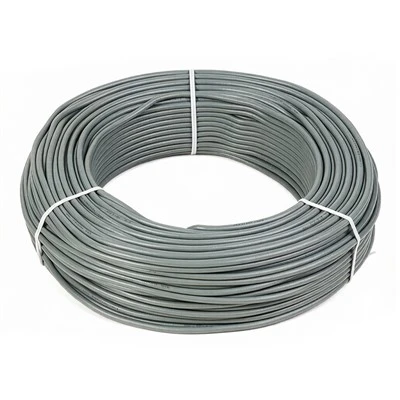
Let’s start with what compensating cables do, to set the stage. Unlike power cables or data cables, which carry electrical current or signal between points, compensating cables are designed to carry the thermoelectric output generated by a thermocouple’s two dissimilar alloy conductors. That output is tiny—microvolts, in most cases—so the cables need to match the thermocouple’s Seebeck coefficient to avoid distorting the reading. But they also need to survive the conditions between the thermocouple’s hot junction (where it’s measuring temperature) and the control room or data logger that records the reading. A cable that frays, melts, or absorbs moisture mid-run won’t just give a bad number—it can lead to incorrect process adjustments, equipment damage, or even safety hazards. That’s where the sheath comes in.
The sheath is the outer protective layer, not the conductive core, and its role is to act as a barrier against four main threats: moisture, chemical corrosion, mechanical damage, and extreme temperature. The choice of sheath material isn’t random; it’s tailored to the application, and getting it right requires balancing performance, cost, and compatibility with the thermocouple’s operating range. As someone who’s spec’d and supplied these cables for 12 years, I’ve learned that the most common sheath materials for compensating cables fall into four categories, each with distinct use cases.
First, there’s PVC (Polyvinyl Chloride). It’s the most widely used sheath for general-purpose applications, and for good reason: it’s inexpensive, easy to extrude, and offers basic resistance to moisture and mild chemicals. But here’s the catch: PVC has a maximum continuous operating temperature of around 105°C (221°F), and it breaks down when exposed to oils, acids, or harsh solvents. I’ve had clients come to me with PVC-sheathed compensating cables that failed in a food processing plant where they were run near vegetable oil fumes—within six months, the PVC became brittle, cracked, and exposed the conductors. That’s a classic case of a material chosen for its low cost that didn’t hold up to the environment. PVC works great for indoor, low-hazard applications like ambient temperature control in office equipment or mild manufacturing, but it’s not for heavy use.
Next, we have XLPE (Cross-Linked Polyethylene). XLPE is a step up from PVC when it comes to temperature resistance: it can handle up to 125°C (257°F) continuously, and it’s far more resistant to chemicals like acids and alkalis. Its cross-linked molecular structure makes it less prone to melting or degrading from thermal cycling, which is why it’s a popular choice for applications where the cable is exposed to moderate heat or occasional mild chemicals. I supplied XLPE-sheathed cables for a pharmaceutical plant a few years back, where they were routed near cleaning solution sprayers that use dilute citric acid; those cables lasted three full years in that environment, whereas a PVC option would have crumbled in half that time. XLPE is also more flexible than many other high-temperature sheaths, which makes installation easier for runs that have bends or go through tight spaces.
But when we’re talking about industrial environments with higher temperatures, or exposure to more corrosive substances, we turn to fluoropolymers—materials like FEP (Fluorinated Ethylene Propylene) and PFA (Perfluoroalkoxy Alkane). Fluoropolymers are the workhorses of harsh environments, and for good reason: they can operate continuously at temperatures up to 200°C (392°F) for FEP, and up to 260°C (500°F) for PFA. They’re almost completely inert to chemicals, including strong acids, bases, and solvents, which means they don’t corrode even in refineries, chemical processing plants, or waste treatment facilities where other sheath materials would dissolve. I once worked on a project for a petrochemical plant that required compensating cables run through a duct where they were exposed to hot, sour gas (a mix of hydrogen sulfide and other corrosive compounds). We went with PFA-sheathed cables, and they’ve been in operation for eight years now with no signs of degradation. The only downside? Fluoropolymers are more expensive than PVC or XLPE, and they’re stiffer, so installation requires a bit more care to avoid kinking.
The fourth sheath material I see used frequently is silicone rubber. Silicone has a unique set of properties: it’s flexible at very low temperatures (as low as -60°C / -76°F) and can handle up to 180°C (356°F) continuously. It’s also resistant to moisture and ozone, which makes it a good choice for outdoor applications or cold storage facilities where temperatures fluctuate between extremes. I supplied silicone-sheathed cables for a frozen food warehouse that needed thermocouples monitoring freezer line temperatures; the silicone stayed flexible through constant -20°C readings, whereas a PVC sheath would have turned brittle and cracked after a few months. The tradeoff with silicone is that it’s less resistant to strong chemicals, so it’s not ideal for environments with harsh solvents or acids—so it’s a niche choice, but a critical one for low-temperature or outdoor general-use cases.
Beyond these four primary materials, there are also specialty sheaths for very specific applications: for example, metal sheaths (like stainless steel) for extreme mechanical abuse, such as cables run through heavy machinery or in underground installations. Metal sheaths are tough, can handle temperatures up to 600°C (1112°F), and are impervious to most chemicals, but they’re heavy, expensive, and require careful installation to avoid damaging the thermocouple conductors inside. I only recommend metal sheaths when there’s no other option—like in steel mills where cables are run near hot rolling equipment and at risk of being crushed by moving parts—but for most applications, the polymer sheaths we’ve covered are more than sufficient.
Now, you might be wondering: does the sheath material really affect the compensating cable’s performance beyond physical protection? The short answer is yes, but not in the way you might think. The sheath’s insulation properties mean it won’t leak or interfere with the tiny thermoelectric signal the conductors carry. For example, a poor-quality PVC sheath that absorbs moisture will cause electrical leakage between the two conductors, distorting the voltage reading and leading to inaccurate temperature measurements. That’s why, when I work with a client to spec a compensating cable, I don’t just ask about the thermocouple type (like Type K, Type J, or Type T) and the cable length—I ask about the environment it will live in: will it be exposed to oil? Acids? Cold? Outdoor weather? That’s the only way to pick the right sheath.
I’ve seen too many projects where someone tries to save a few dollars by using a PVC sheath in a high-heat environment, and ends up replacing all the cables within a year. Or where they overspec, using an expensive PFA sheath for a simple indoor application, driving up costs unnecessarily. The sweet spot is matching the sheath to the exact operating conditions, not going with the cheapest or most expensive option blindly.
As a compensating cable supplier, my job isn’t just to sell you a spool of wire—it’s to make sure that your temperature measurement system works as it should, day in and day out. That means taking the time to understand your application, pointing out the risks you might not have considered, and recommending the right sheath material (and conductor alloy, for that matter) to avoid costly failures. For example, if you’re working in a food processing plant where cleanliness is key, I’ll often suggest a FDA-approved PVC or XLPE sheath that’s easy to wipe down, rather than a fluoropolymer that’s harder to clean. If you’re in a chemical plant, I’ll prioritize FEP or PFA to avoid corrosion. If you’re in a cold storage facility, silicone is the way to go.
I also make sure to test every batch of cables before they leave our facility: checking the sheath’s thickness, its resistance to moisture, its temperature stability, and its compatibility with the conductor alloy. I’ve seen third-party test results where a “fluoropolymer” sheath was actually a low-quality mix that degraded at 180°C instead of 200°C, so I never cut corners on material sourcing. We work with manufacturers that have rigorous quality control, because a bad sheath can ruin a good cable.
If you’re in the market for compensating cables, whether you’re replacing old ones for a thermocouple that’s been working for 20 years or outfitting a new facility, don’t just focus on the conductors. Ask about the sheath material. Ask about its temperature rating, chemical resistance, and suitability for your environment. That small detail could be the difference between a cable that lasts five years and one that lasts 15.
At the end of the day, compensating cables are a quiet workhorse of industrial temperature measurement. Their job is simple: to carry the thermocouple’s signal accurately, without getting in the way. But the sheath material is what allows them to do that job in the first place. Whether you’re dealing with mild indoor conditions or extreme outdoor/industrial environments, there’s a sheath material made for your application—and getting it right will save you time, money, and headaches down the line.
If you’re ready to spec compensating cables that are tailored to your exact needs, or if you have questions about which sheath material is right for your project, I’m here to help. Reach out to our team to discuss your requirements and get a quote that balances performance and value.
Compensating Cables References
- ASTM International. Standard Specification for Thermocouple Extension and Compensating Cables. ASTM E230-21. West Conshohocken, PA: ASTM International, 2021.
- ISO. Thermal Insulating Materials for Thermocouple Cables and Sheaths. ISO 17566:2019. Geneva: International Organization for Standardization, 2019.
- Perfluoroalkoxy Alkane (PFA) Chemical Resistance Guide. DuPont Fluoroproducts, 2022.
- Industrial Cable Sheath Materials: Selection Guidelines. National Electrical Manufacturers Association (NEMA), 2020.
- Thermocouple Compensating Cable Installation and Maintenance. Instrumentation, Systems, and Automation Society (ISA), 2021.
Anhui Yuantong Cable Co., Ltd.
As one of the most professional compensating cables manufacturers and suppliers in China, we offer a wide range of cables with superior quality. Please feel free to wholesale bulk customized compensating cables from our factory. Also, pricelist is available.
Address: Yongfeng Industrial Park, Tianchang City, Anhui Province
E-mail: ahytcable@126.com
WebSite: https://www.yuantongcable.net/
